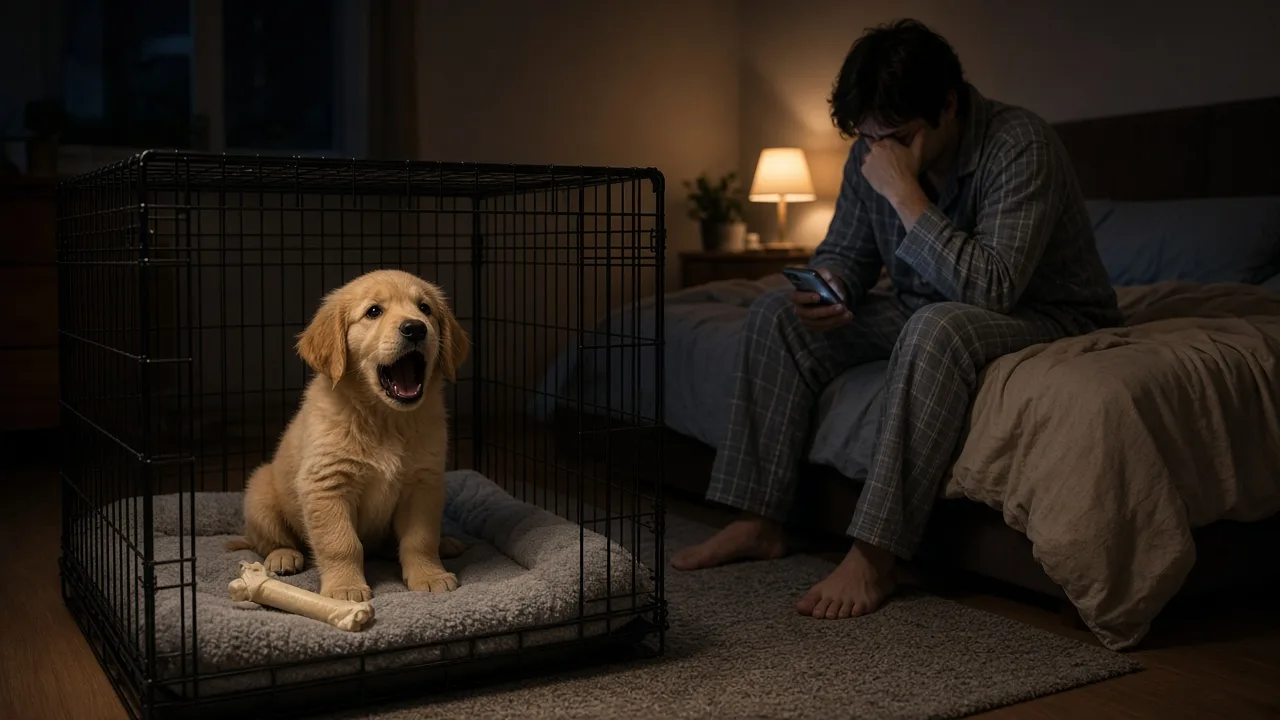
 Bedtime was an hour ago. The barking has not stopped.
Reddit is full of owners asking the same 1 AM question: do I let my puppy bark it out in the crate, or go to them? You have tried waiting: the second you stand up, the barking starts again. Now you are lying there wondering if you are teaching your puppy that barking works, or that nobody comes.
On r/puppy101, the owner of a 4.5 month old golden retriever described a night of barking "from around 11pm (his usual bedtime) to 1 in the morning." Everyone said to let him cry it out, and that did not sit right. "I constantly feel like I'm messing up even if I make a slight noise near him," they wrote. (read the thread)
This page collects lessons from that thread and five others, checked against vets and trainers: PetMD (written by a board certified veterinary behaviorist), the AKC, the VCA, ManyPets, PDSA, and Preventive Vet. Owner stories are what happened in one home, not proof. LoveMyPuppy sells a handheld bark deterrent for dogs 6 months to 8 years. It is not meant for young puppies, so this page focuses on what to do first. It does not replace advice from your vet or a qualified trainer.
Inside:
- The two minute line a veterinary behaviorist uses before you go back in the room
- The 5 second trick one owner used to go from instant howling to an hour of quiet
- The one kind of crate barking you should never wait out
Quick answer: Should you let a puppy bark it out in the crate? Only briefly. PetMD says you can ignore the first cries, give a short calm reply if they last past about two minutes, and go in if the barking keeps escalating. Check for a potty need first. A puppy should not be barking in the crate for hours.
On this page
- Six lessons from Reddit owners
- Why your puppy is barking in the crate
- How long to let a puppy cry in the crate
- What to do when the barking starts at night
- A bedtime routine for less crate barking
- When it is more than crate barking
- Which puppy owner are you?
- What about bark collars and deterrents?
- Frequently asked questions
Key Takeaways
- Short, mild protests can be waited out. Long or escalating barking needs a response, says PetMD.
- Rule out a potty break first. PetMD's rule of thumb is your puppy's age in months plus one for the hours between breaks.
- Never open the crate in the middle of a bark. The VCA says to release only when your puppy is quiet.
- The AKC warns that leaving a puppy to "cry it out" can create negative feelings about the crate.
- On Reddit, the owners who reported progress built crate time in small steps, often with someone close by at first.
Six lessons from Reddit owners
Each lesson starts with a real r/puppy101 post, then what the experts say.
1. Two hours is not "barking it out"
The thread above started with a night of barking from 11pm to 1 in the morning, after earlier nights where ignoring worked most of the time, but only after 10 to 20 minutes of barking. The owner's gut said something was off.
What the experts say: PetMD is blunt: "Your puppy should not be screaming for hours in their crate." The AKC says to never leave a dog to cry it out, and its breeder guide warns that letting puppies cry it out "can create negative associations with being crated." PDSA's vets say they "would never recommend ignoring your puppy when they cry at night, especially in their first few nights." A quiet puppy is not always an OK puppy, they add.
2. A burst, a pause, and another burst is a pattern
The same owner described bursts of barking, a bit of silence, then more. "It almost seems like he's waiting for a reaction from us," they wrote.
What the experts say: Preventive Vet describes demand barking as repetitive, with the puppy "intently looking towards you in anticipation of your next move." The fix is timing. The VCA says to never release a puppy unless it is quiet, and Adopt a Pet says even a second or two of quiet is your chance to open the door. Full guide: puppy demand barking.
3. Loving the crate by day does not always mean quiet at bedtime
Another owner's 4.5 month old golden "always barks for up to 30 minutes" at bedtime, even though she ran into the crate, ate all her meals there, and got chews and a covered crate at night. (thread)
What the experts say: The AKC says barking after a dog has settled for a while points to boredom, hunger, or a bathroom need, while barking within minutes points to stress. At bedtime, distance matters too. PetMD suggests a crate in your bedroom at night, and the AKC notes many owners do this so the puppy does not feel isolated.
4. Ignoring alone can stall a puppy with energy to burn
A third owner's golden barked to be let out when she had energy. "She could genuinely bark all day," the owner wrote, and the neighbors came round to complain. She was quiet for about an hour after a walk or play, or 20 minutes with enrichment. (thread)
What the experts say: The AKC says ignoring attention barking works, but can frustrate a dog and fails to give them a better way to ask. Its answer is to teach "quiet": reward a second of silence, slowly ask for longer, then add the word right before the pause you expect. The AKC also says not to yell, because to your dog it only sounds like you are barking too.
5. Tiny steps beat long waits
"Today my 4mo pup spent a full hour alone in his crate, completely silent," one owner posted. Two weeks earlier he howled the moment they left the room. They started by stepping out and coming straight back, then 5 seconds, adding 5 seconds at a time, then 10, then 30, then a minute. (thread)
What the experts say: Adopt a Pet says if barking starts at 10 minutes, start the next session at 5 and add 30 seconds to a minute at a time. PetMD says ongoing crying can mean you are leaving your puppy alone longer than they are ready for.
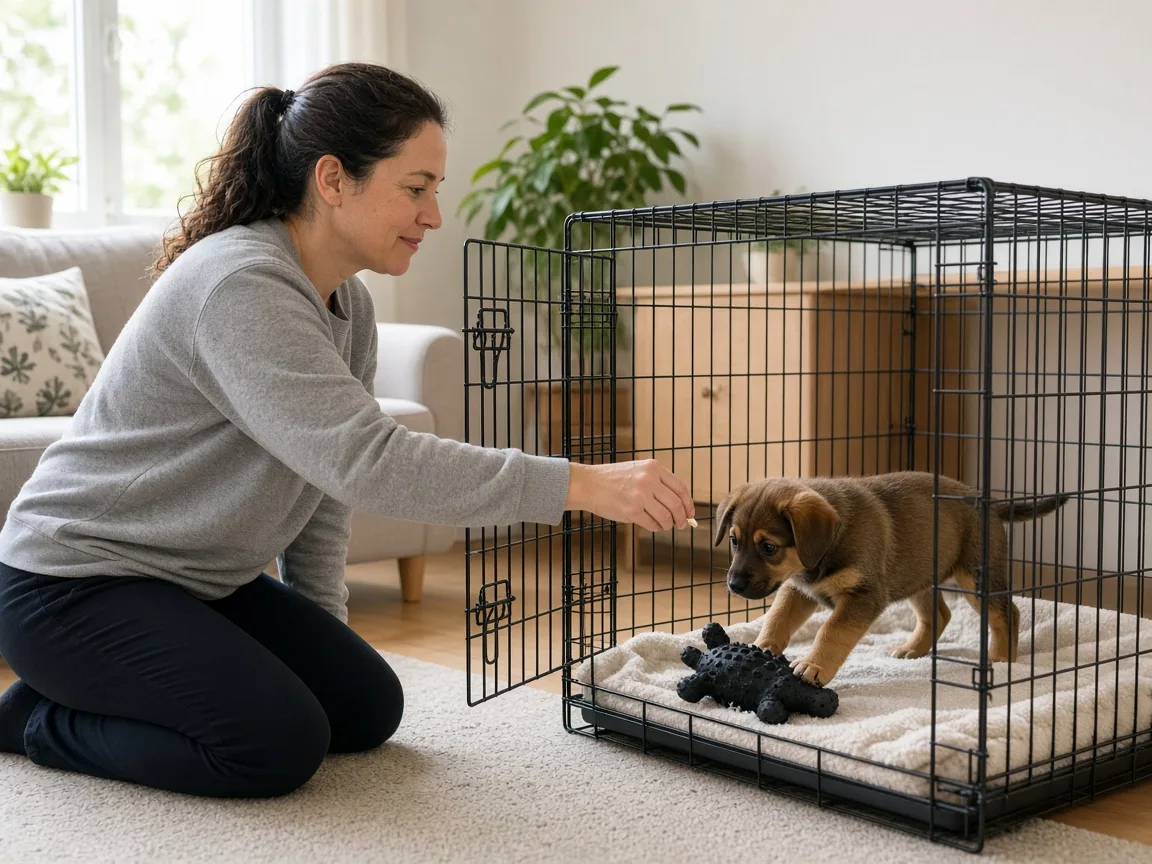 Short, happy crate sessions in daylight can make nights easier.
6. Sleeping by the crate works, and it costs you
One family had someone sleep next to the crate for the first two weeks, stroking the puppy through the bars and playing white noise. That person "slept TERRIBLY and had MAJOR REGRETS," the owner admitted. After 3 to 4 weeks the puppy went in without a human there and would "mumble and whine a bit, but not be afraid." (thread) Another owner of an 8 week old spent most of a night on the floor by the crate, because he settled as long as she stayed. (thread)
What the experts say: PDSA says your being there is likely to help a worried puppy settle. PetMD suggests reaching your fingers into the crate if your puppy is not settling after a few minutes. ManyPets adds that white noise helps some puppies, but not if your puppy is getting distressed.
Why your puppy is barking in the crate
Crying and barking in the crate usually come from the same few causes. Figure out which one you are hearing first.
| What you hear | What it often means | What helps |
|---|---|---|
| Crying in the first few nights home | Missing littermates, new place | Crate near your bed, familiar smells |
| Barking after a long settle | Potty, hunger, or boredom | A calm, boring potty break, a safe chew |
| Bursts, pauses, eyes on you | Demand or attention barking | Wait for a pause, then reward quiet |
| Nonstop high pitched barking with pacing or panting | Distress | Comfort, shorter crate time, slower training |
| Screaming, biting at the door, escape attempts | Panic in the crate | Stop and get professional help |
Sources for this table: PetMD, PDSA, the AKC, the VCA, and Preventive Vet.
How long to let a puppy cry in the crate
A timeline from the vet and trainer advice above. It is a guide, not a stopwatch.
| How long | What to do |
|---|---|
| First minute or two | Wait quietly. Your puppy may be "contact calling" to check you are near |
| Past about two minutes | Give a brief, calm verbal reply. You can repeat this two or three times |
| Barking is escalating | Go in. Check for a potty need, then comfort without fuss |
| You want to open the door | Wait for a pause, even a second or two, then open |
Sources for this table: PetMD, ManyPets, PDSA, the VCA, and Adopt a Pet.
The Preventive Vet guide's author waits "one minute at most" to see if a puppy settles alone. ManyPets says to check on a puppy that has cried for a minute or so, or sooner if it sounds distressed.
Full night plan: puppy crying in the crate at night.
What to do when the barking starts at night
- Pause and listen. Give it a minute or two. Many puppies settle on their own.
- Answer briefly. A soft word from the bed tells your puppy you are close. PetMD says you can repeat this two or three times.
- Think potty. PetMD says to take your puppy's age in months and add one to estimate the hours between breaks. By that rule of thumb, a 4 month old may last up to about five hours at most.
- Make potty breaks boring. ManyPets says no play when you take your puppy out to pee before bed, and to keep night interactions low key.
- Comfort, do not party. Fingers through the crate and a calm voice, as PetMD suggests.
- Open only in a pause. The VCA says releasing a quiet puppy teaches that quiet, not crying, gets rewarded.
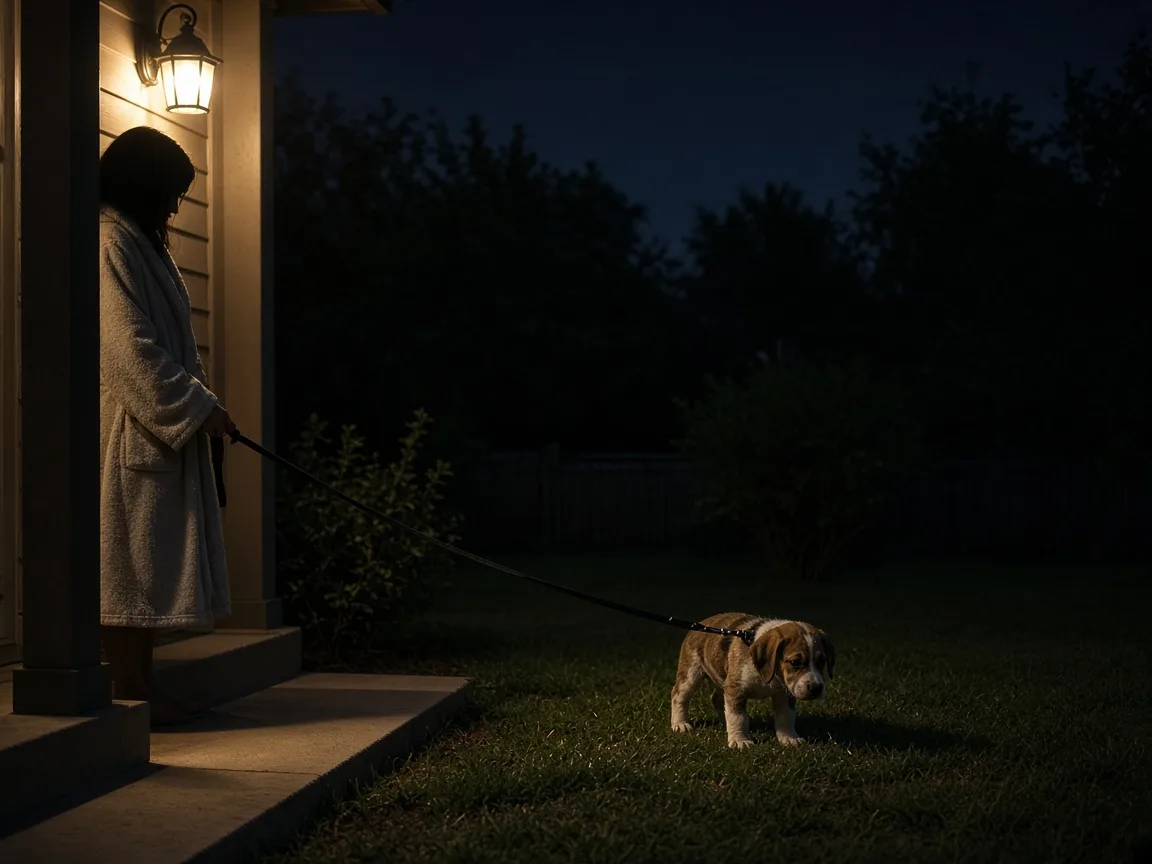 Out, potty, back in. No games at 2 AM.
Do not bang on the crate. The first thread's owner added this warning after trying it: "Don't do this! not humane and can cause noise phobias!" PetMD's gentler version is a light knock on the wall to briefly break the crying before you enter the room.
A bedtime routine for less crate barking
- Move the crate close. PetMD suggests a bedroom crate at night, plus a second crate where the family spends the day.
- Bring a familiar smell. PetMD suggests a soft T shirt that smells like you, or a plush toy with a heat pack and heartbeat to mimic littermates.
- Cover the crate. PetMD says a blanket over the crate can create a calm, den like space.
- Skip big play and big meals right before bed. That is ManyPets' advice, along with a potty break right before bed.
- Watch the water bowl late. ManyPets vet Dr Kirsten Ronngren says letting a puppy gulp lots of water before bedtime is "almost a way to guarantee an accident."
- Tire the brain, not only the legs. PetMD suggests tug, a flirt pole, or a frozen stuffed puppy toy. It also warns that if your puppy already dislikes the crate, being tired may not stop the crying.
- Build the crate by day. The AKC's trainer suggests tossing a treat in any time your puppy goes near the crate, then adding treats every 5 to 10 seconds while they stay in. ManyPets and the AKC both say to never use the crate as punishment.
When it is more than crate barking
The AKC lists signs your dog should not be crated right now: pacing, shaking, scratching or biting at the door, long bouts of howling or barking, and drooling. Dogs in a panic can hurt themselves trying to escape.
If you see those signs:
- Shorten crate time and slow the training way down.
- Try a larger puppy proofed space, like an exercise pen, which the AKC suggests for anxious dogs.
- Talk to your vet to rule out pain or illness, which ManyPets lists on its troubleshooting checklist.
- If progress stalls, PetMD recommends a board certified veterinary behaviorist or a certified applied animal behaviorist.
Which puppy owner are you?
These are invented examples, not real customers.
The first night owner. Your 8 week old puppy cried from the moment the door closed. PetMD calls this normal for puppies away from their litter. Put the crate next to your bed, answer softly, and plan a potty trip in the night.
The "it was working" owner. Your 4 month old settled for weeks. Now there are bursts of barking, a pause, and more barking. Look at what changed, wait for pauses, reward quiet, and put a few short daytime crate sessions back in.
The apartment owner. You are worried about the neighbors, like the owner in lesson 4. Comfort early, keep breaks boring, and build crate time in small steps by day. Got a complaint? See neighbor complaining about dog barking.
What about bark collars and deterrents?
The AKC says spray collars, ultrasonic devices, and electronic collars work by punishment, that punishment can harm a dog's physical and mental health, and that these tools are no more effective than positive reinforcement. It advises a certified trainer or behaviorist first. The VCA also cautions that disruptions can make a very anxious pet's barking worse.
For a young puppy crying in a crate, a device is not the fix. LoveMyPuppy's product page says its handheld bark deterrent is for dogs 6 months to 8 years, not younger puppies, and to stop if the cue frightens your dog. It is a handheld cue for an older dog's barking moments, like the doorbell, used with reward based training.
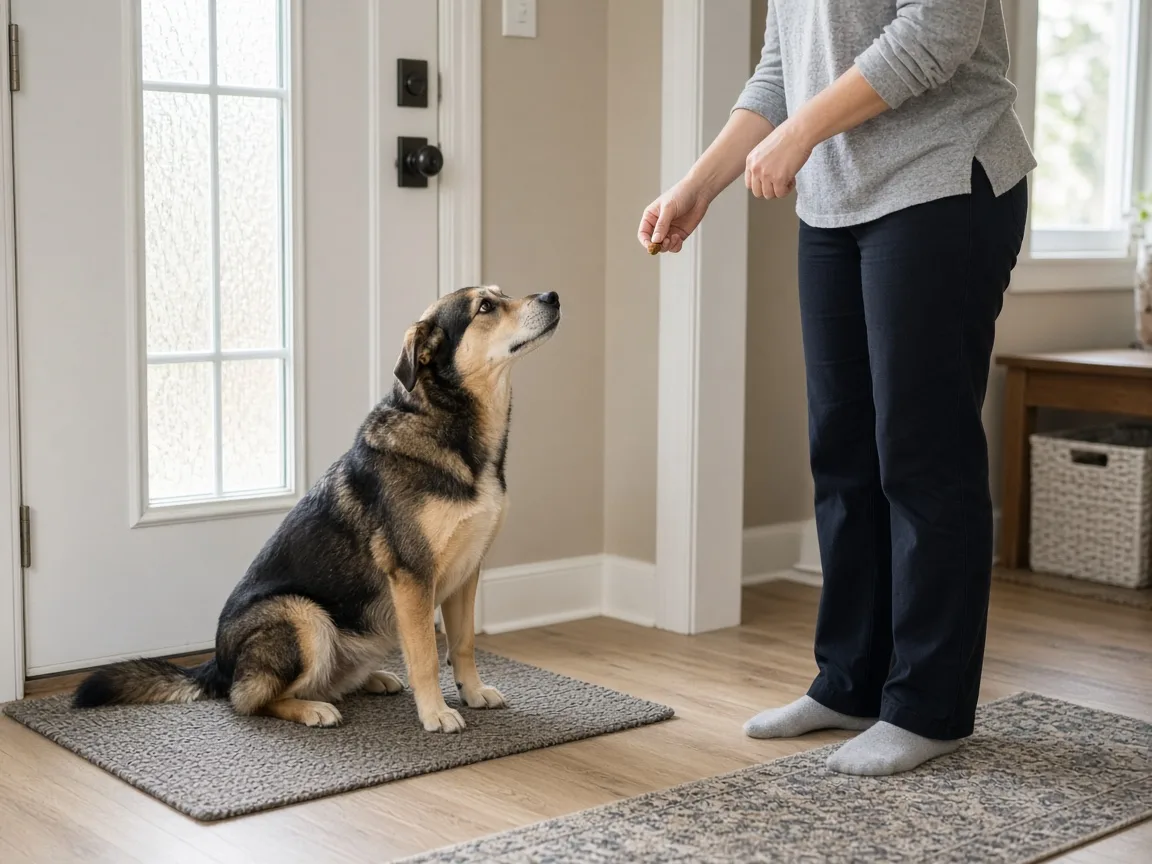 For an older dog, the goal is still a calm choice you can reward.
Doorbell steps: how to stop dog barking at the door and dog barks at doorbell on TV.
If you have an older dog who barks at the door, Click Here to see who the handheld cue is and is not for.
Click Here To See Who The Bark Deterrent Is For
Frequently asked questions
Should I let my puppy bark it out in the crate?
Only for a minute or two. PetMD says you can ignore the first cries, give a brief calm reply if they go past about two minutes, and go in if the barking escalates. The AKC warns that leaving a puppy to cry it out can create negative associations with the crate.
How long should I let my puppy cry in the crate?
PetMD says a few minutes is OK to let a puppy settle alone. If the crying keeps escalating, check on them. A puppy should not be crying for hours.
Should I ignore my puppy barking in the crate at night?
Ignore short, mild fussing, but not escalating or frantic barking. PDSA says not to ignore a puppy crying at night, especially in the first few nights, and to check for a toilet need first. Keep the visit calm and brief.
What does Reddit say about puppy crate barking?
On r/puppy101, owners who reported progress often built crate time in small steps, kept the puppy close at night, and fed treats and chews in the crate. Those stories are one home each, so check them against your vet or a qualified trainer.
Why is my puppy barking in the crate all of a sudden?
The AKC says barking after a puppy has settled for a while often means boredom, hunger, or a need to potty. Check those first, then look at what changed in the routine. If it continues, ask your vet to rule out a health problem.
How do I stop my puppy barking in the crate when I leave?
Build alone time slowly. PetMD says ongoing crying means you may be leaving your puppy longer than they are ready for. If your puppy panics when left, the AKC suggests a pen instead and a qualified trainer or behaviorist.
Can I use a bark collar on a puppy?
The AKC says bark collars and ultrasonic devices work by punishment and advises a certified trainer or behaviorist before using any of them. The LoveMyPuppy handheld bark deterrent is for dogs 6 months to 8 years, not younger puppies.
Reviewed November 15, 2026. Reddit posts were read on that date, and owner quotes come from the original posts on r/puppy101. Crate and barking advice was checked against PetMD, the AKC, the VCA, ManyPets, PDSA, Preventive Vet, and Adopt a Pet. Product details come from the LoveMyPuppy product page. If your puppy seems distressed, in pain, or unwell, talk to your vet.