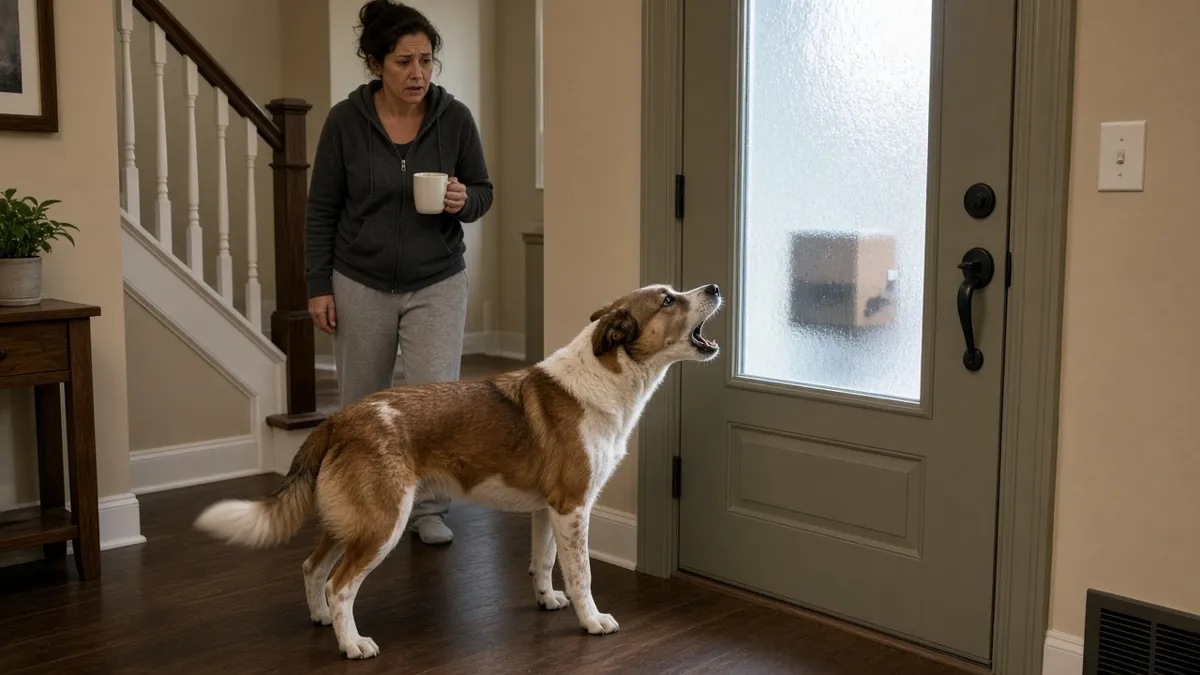
 The doorbell has not even finished ringing.
Ding dong. Your dog launches off the couch, skids across the floor, and starts barking at the door like the house is under attack. You are trying to sign for a package with one hand and hold a collar with the other. Your guest is stuck on the porch, smiling politely. Your neighbor's dog joins in. And you know it will happen again tomorrow, every time the delivery driver comes.
If that is your house, you are far from alone. The AKC's doorbell guide, written by a certified professional dog trainer, says many dogs get overly excited when the doorbell rings, and that the barking is stressful for dogs too. Door barking is one of the most trainable kinds of barking, because you know exactly when it is going to happen.
This page brings together what works from the AKC, the VCA (written by two board certified veterinary behaviorists), the ASPCA, Preventive Vet, Oregon Humane Society, and San Diego Humane Society. LoveMyPuppy sells a handheld bark deterrent, and we will be straight with you about where it fits and where it does not.
Inside:
- The doorbell recording trick shelters use, and the one sign the volume is too high
- Why yelling "quiet" can make door barking worse
- The jar to keep by your front door
Quick answer: How do you stop a dog barking at the door? Stop the practice first by blocking the door and asking visitors to text. Then pair a quiet doorbell recording with treats, teach your dog to go to a mat when the bell rings, and reward quiet. Avoid yelling, and get help if the barking looks fearful.
On this page
- Why dogs bark at the door and doorbell
- Step 1: Stop the daily practice
- Step 2: Change what the doorbell means
- Step 3: Teach go to place
- Step 4: Teach a calm quiet cue
- Step 5: Practice with real visitors
- What owners on Reddit say worked
- What makes door barking worse
- Which door barker do you have?
- Where a bark deterrent fits
- Frequently asked questions
Key Takeaways
- Door barking is often territorial or alarm barking, which the ASPCA says is often driven by fear and anticipation of a threat.
- Every ring your dog barks at is practice. Management comes first.
- The AKC and shelter trainers use a doorbell recording and treats to change what the sound means.
- A "go to place" mat gives your dog a job that does not fit with barking at the door, says the AKC.
- The VCA and ASPCA warn that yelling or punishing territorial or anxious barking can make it worse.
Why dogs bark at the door and doorbell
The ASPCA describes several kinds of barking, and door barking usually fits one of three.
| Kind of door barking | What it often looks like | First step |
|---|---|---|
| Territorial or alarm | Stiff body, rushing the door, a bark at every knock or delivery | Block the door, then change what the sound means |
| Greeting | Wiggly body, whining, jumping, barking hello | Teach a mat and calm greetings |
| Fearful | Backing away while barking, hiding, trembling | Get help from a qualified professional first |
Sources for this table: the ASPCA, the AKC, and the VCA.
The ASPCA says you can usually tell from your dog's body whether the bark means "Welcome, come on in!" or "you'd better hit the road." The VCA's behaviorists add that some dogs bark whenever they meet unusual sounds or sights, and that a doorbell can become a conditioned trigger for barking.
Many people search for why a dog is barking at the door at night, or barking at the door for no reason. Often the reason is a sound you cannot hear from bed. The VCA says some dogs bark at novel sounds, sights, or smells. If night barking at the door is new, ask your vet to rule out a health problem.
Step 1: Stop the daily practice
Every ring your dog barks at is another rep of the habit you want to break. Management is not giving up. It is the base everything else stands on.
- Ask visitors to text or knock. Oregon Humane suggests a sign asking people to text, or even disconnecting the doorbell, so the real sound only happens during training.
- Keep your dog away from the door. The VCA says confining your dog to a crate or room away from doors can cut exposure. The AKC suggests dog gates and a leash for dogs who dart out the door.
- Mask outside noise. Preventive Vet suggests a fan, noise machine, radio, or TV, and closing blinds where your dog keeps watch.
- Consider a new chime. The VCA says doorbells that have become barking triggers can be changed to a different sound.
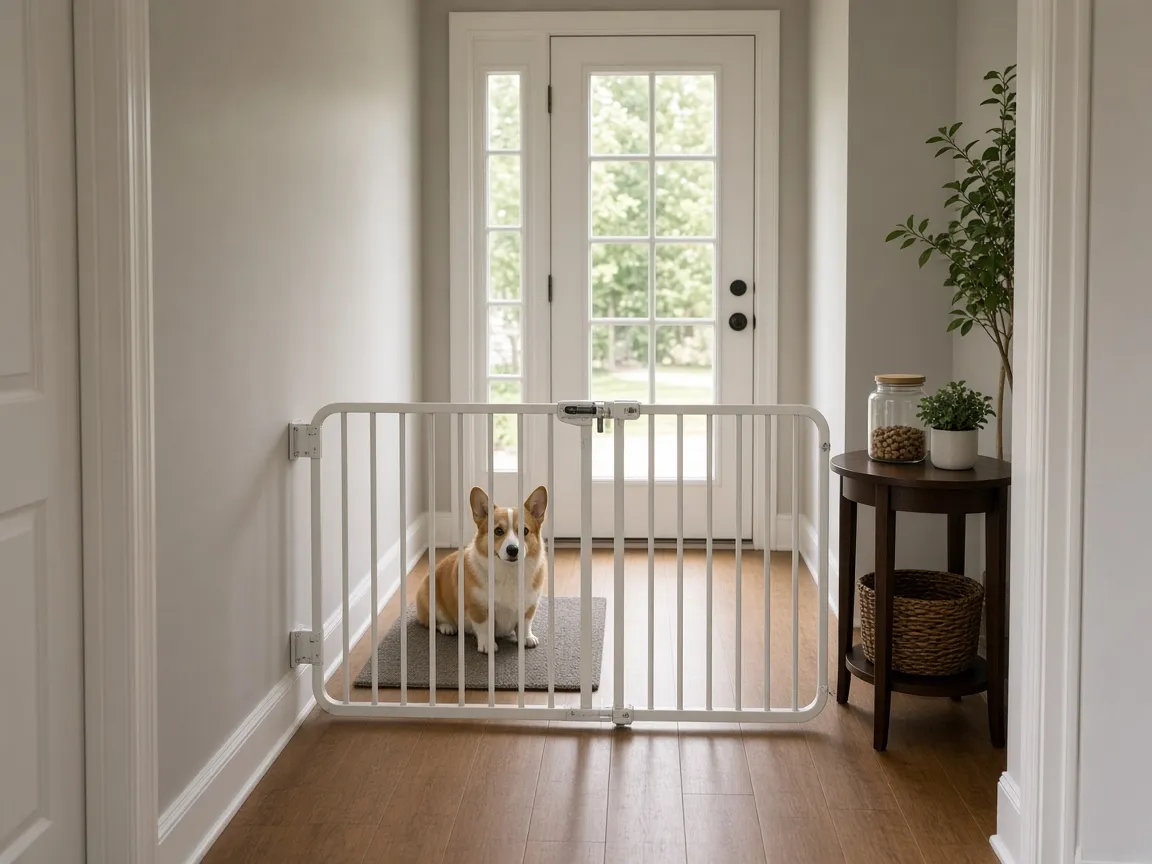 A gate, a mat, and treats near the door set you up to win.
Step 2: Change what the doorbell means
Right now, the doorbell means "intruder" or "party." You want it to mean "snack." The AKC's method:
- Grab a high value treat that takes a while to eat, like dog friendly peanut butter on a lick mat.
- While your dog is licking, play the doorbell sound or have a helper ring it.
- Praise your dog as they keep licking. Repeat several times.
- Once your dog keeps eating calmly through the sound, ring first, then give the treat.
Oregon Humane adds the volume trick. Record your doorbell and play it so quietly that your dog notices but does not react. Practice one to three times a day for two to three minutes, and only turn it up when your dog hears the sound and looks to you for a treat. "If your dog starts to bark, then the volume is too high." Clappison Animal Hospital suggests starting away from the entryway and doing the same with knocking for dogs who react to knocks.
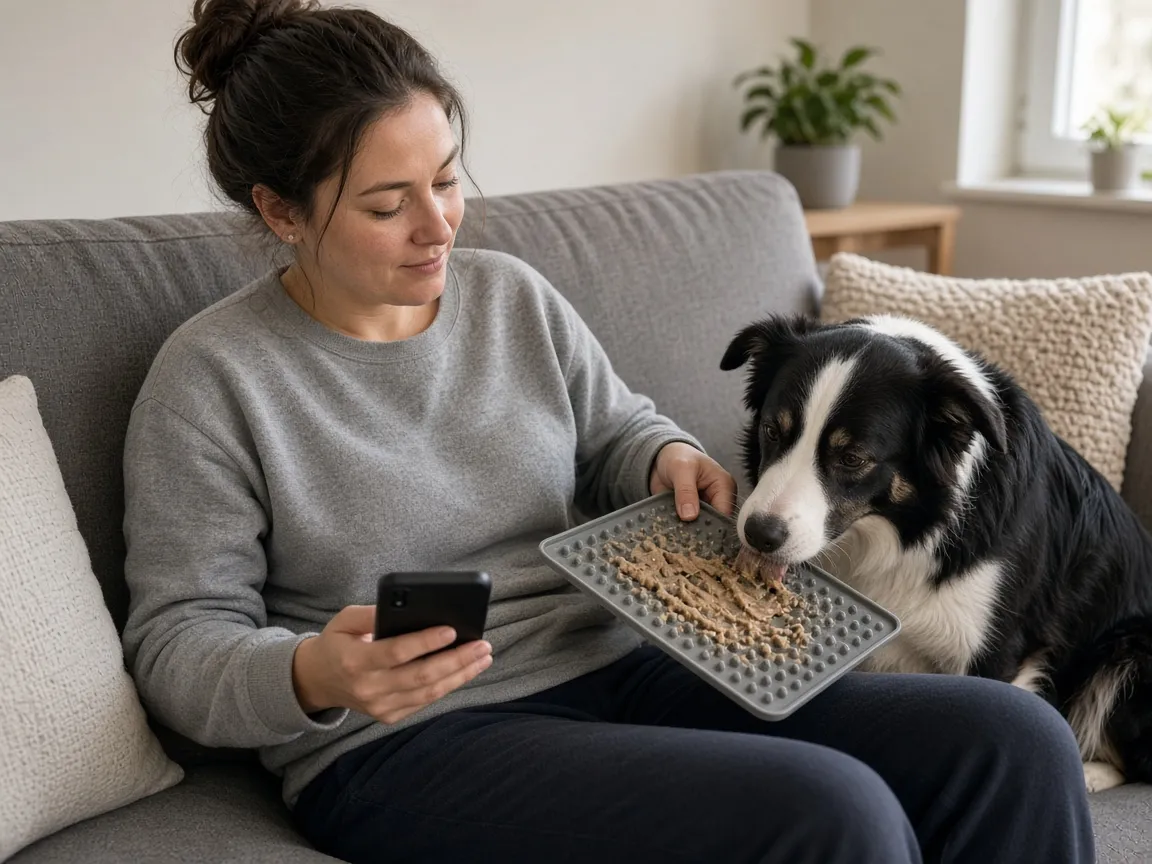 Quiet ring, tasty lick mat, calm dog. Then turn it up slowly.
Step 3: Teach go to place
The AKC calls this giving your dog something to do that is incompatible with barking or scratching at the door. You cannot lie on a mat and charge the door at the same time.
- When the doorbell sounds, get your dog's attention with a treat and lure them to their bed or crate. Treat when they are on it.
- Repeat over several sessions and days.
- Once your dog follows you to the bed reliably, add a cue like "go to bed" or "place."
- Fade the lure. Ask, then treat when your dog is in bed.
- Practice opening the door and talking to a helper while you keep rewarding your dog for staying on the bed.
Preventive Vet's mat training guide breaks this into even smaller steps, starting with rewarding a look at the mat. The AKC also suggests keeping a treat jar by the front door so you can reward your dog fast when someone shows up unexpectedly.
Step 4: Teach a calm quiet cue
The ASPCA's version for territorial barking: let your dog bark three to four times, then say "Quiet" calmly, without shouting. Call your dog away from the door, ask for a sit, and reward. Keep feeding small treats while your dog stays quiet, until the trigger is gone.
The VCA describes another way. While your dog barks at the doorbell, place a tasty treat by their nose and say your quiet word. Most dogs stop barking to sniff. Reward the quiet. The VCA is firm on one rule: "Never reward barking with any type of attention, even occasionally."
Step 5: Practice with real visitors
- Use a helper. San Diego Humane says a non family member should help you practice so your dog gets used to people coming in.
- Leash first. The AKC suggests a leash when visitors are expected if your dog darts out doors.
- Reward calm, not barking. The VCA suggests rewarding quiet with play, a belly rub, or a treat while visitors come and go, so arrivals start to predict good things.
- New puppy plus barky older dog? The AKC suggests keeping them apart when the doorbell rings, so the puppy does not learn the older dog's habit.
What owners on Reddit say worked
We scanned about 70 Reddit threads on door, doorbell, visitor, and demand barking from r/puppy101, r/dogs, and r/DogAdvice. Doorbells, knocks, and visitors were the top triggers, and many owners said they had "tried everything."
When one owner asked how people taught their dogs not to bark at the front door, the top answer was: "Practice. Every time someone comes to the door and they don’t bark… reward reward reward." (comment) The next one described a place command, so that "a knock on the door means either staying put or going to his place. He'll still give off one alert bark and then trot to his place." (comment)
A reply in r/dogs put it plainly: "telling a dog to STOP doing something is always less effective than telling them to DO something else." (comment)
One skeptic worried their dog would learn "the fake doorbell means nothing but the real one still does." (comment) That is why the AKC and Oregon Humane move on to the real bell with a helper once the recording is easy.
What makes door barking worse
- Yelling. The VCA says yelling at a dog that is barking from anxiety or territorial response is likely to increase barking and anxiety. The AKC says it sounds like you are barking too.
- "Who's there?" The ASPCA says not to encourage barking at sounds by saying that or rushing to look out the window.
- Inconsistency. The ASPCA warns against punishing barking at some sounds while encouraging it at the door.
- Punishing fear. The ASPCA says to never use punishment if your dog is barking from fear or anxiety unless a certified applied animal behaviorist or veterinary behaviorist advises it. It also warns that a territorial dog whose barking is suppressed by punishment may try to guard another way, like biting without warning.
If your dog lunges, growls, or seems afraid of visitors, skip the gadgets and call a qualified trainer or behaviorist.
Which door barker do you have?
These are invented examples, not real customers.
The delivery alarm. Your 3 year old shepherd mix barks at every truck and doorbell. Block the window, switch deliveries to a text, and start doorbell recordings at whisper volume.
The over the top greeter. Your 1 year old lab barks and jumps on every guest out of pure joy. Go to place on a mat, a leash for arrivals, and treats from the jar by the door.
The new puppy copying the big dog. Your 4 month old has started barking every time your older dog does. Separate them at the door and train each one alone, as the AKC suggests.
Where a bark deterrent fits
Here is the honest picture. The AKC says spray collars, ultrasonic devices, and electronic collars work by punishment, are no more effective than positive reinforcement, and that you should talk to a certified trainer or behaviorist before using one. The VCA says audible and ultrasonic devices are usually not reliable deterrents on their own. The ASPCA says noise collars are ineffective with most dogs.
The VCA also describes a narrow role. During structured training, while the dog is asked for a quiet or sit stay, barking can be interrupted with a device such as an ultrasonic trainer, and the sessions are repeated with progressively more intense triggers. It notes this can work, but progress can be slow.
That is the job LoveMyPuppy's handheld bark training device is built for. Its product page says it is a handheld cue for dogs 6 months to 8 years, used alongside reward based training, not for young puppies or dogs who seem frightened by the cue, and to stop if the cue frightens your dog. Think of it as an interrupter you hold during doorbell practice, followed right away by the mat and the treat. It is not a fix for a fearful or anxious dog.
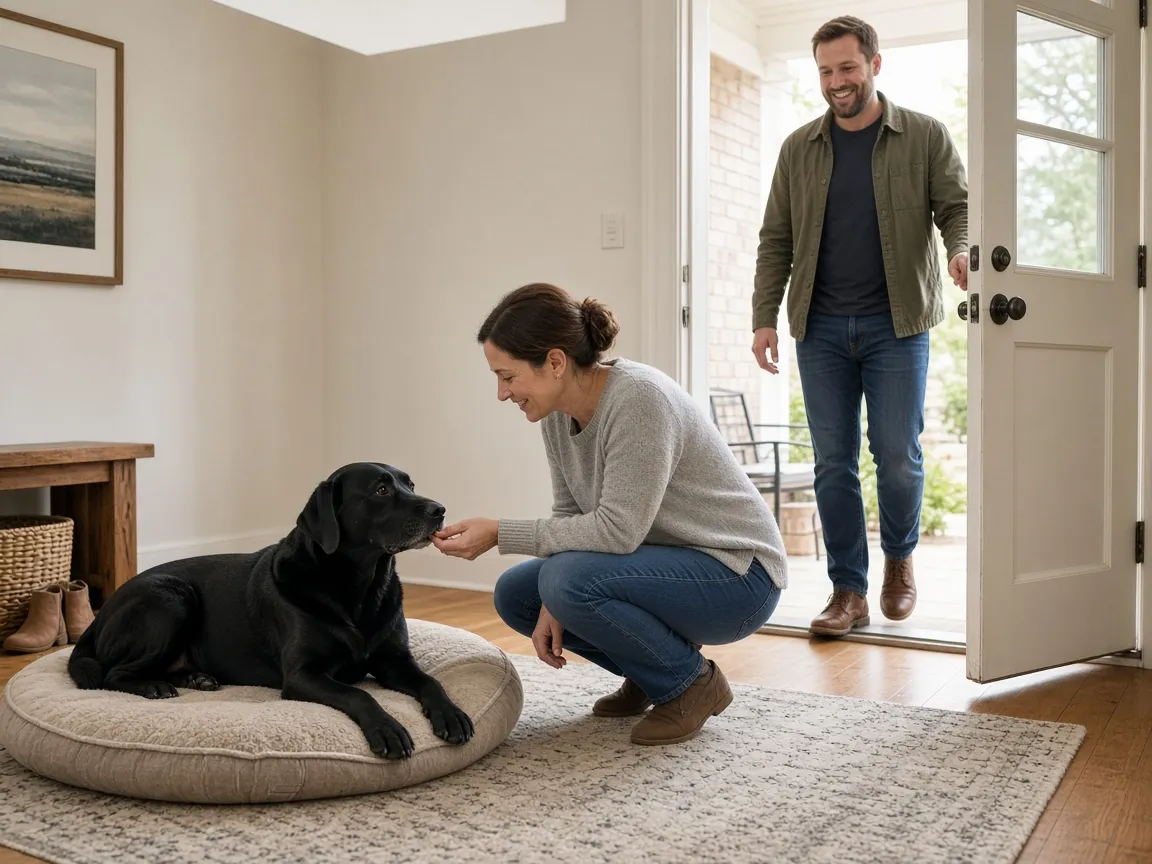 The goal is a dog who chooses the mat when the bell rings.
If your dog is between 6 months and 8 years, confident, and barks at the door for doorbells and deliveries, Click Here to see how the handheld cue works and who it is for.
Click Here To See The Handheld Bark Deterrent
Still in the puppy stage? Start with our guide to puppy crying in the crate at night, or read real owner stories in our lessons from Reddit on letting a puppy bark it out.
Frequently asked questions
How do I stop my dog from barking at the door?
Start with management: block the door and ask visitors to text. Then use a quiet doorbell recording with treats, teach go to place, and reward quiet. The AKC and Oregon Humane both describe this kind of gradual practice.
How do I stop my dog from barking at the doorbell?
Record the doorbell, play it very quietly while your dog eats a treat, and raise the volume slowly. Oregon Humane says if your dog barks, the volume is too high. Then teach your dog to go to a bed when the bell rings, as the AKC describes.
Why does my dog bark when someone knocks on the door?
The ASPCA says territorial barking is often driven by fear and anticipation of a threat near your home. Some dogs are greeting instead. Body language helps you tell the difference.
Why is my dog barking at the door at night?
The VCA says some dogs bark at unusual sounds, sights, or smells, and night sounds outside may be what your dog hears. Noise masking can help, Preventive Vet says. If it is new, ask your vet.
Why does my dog bark at the doorbell on TV?
The VCA says a doorbell can become a conditioned trigger for barking, so the sound alone can set your dog off. Practicing with a recorded doorbell at low volume, as the AKC and Oregon Humane describe, can help with TV sounds too.
Should I yell at my dog to stop barking at the door?
No. The VCA says yelling at territorial or anxious barking is likely to make it worse, and the AKC says it sounds like you are barking along. Use a calm cue and reward quiet.
How long does it take to stop a dog barking at the doorbell?
It varies. The AKC suggests practice over several sessions and days, and Oregon Humane says to stay at each volume until your dog stays calm. Short daily sessions help.
Do ultrasonic bark deterrents work for door barking?
Results vary: the VCA says they are usually not reliable on their own, and the AKC advises a certified trainer first. LoveMyPuppy's handheld deterrent is meant only for dogs 6 months to 8 years, alongside reward based training.
My dog barks at visitors and seems scared. What should I do?
Skip punishment and devices. The ASPCA says punishment can make fearful barking worse. Talk to your vet and a certified applied animal behaviorist or veterinary behaviorist.
Reviewed November 15, 2026. Advice checked against the AKC, the VCA, the ASPCA, Preventive Vet, Oregon Humane Society, San Diego Humane Society, and Clappison Animal Hospital. Product details come from the LoveMyPuppy product page. Personas are invented examples. If your dog seems fearful, aggressive, or unwell, talk to your vet.