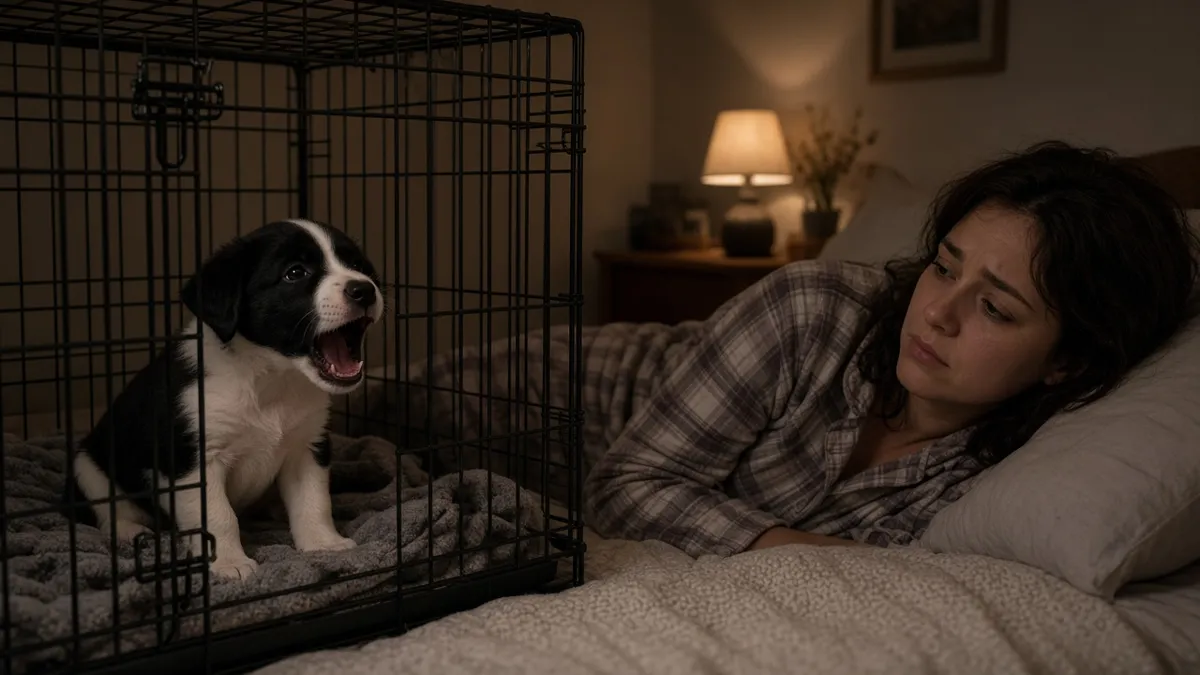
 It is 1 AM. You are wide awake, and so is your puppy.
Your puppy was fine all day, napping in the crate, eating dinner in the crate, even walking in on their own. Then the lights went off, and the crying started. Now you are lying in the dark, doing math. Is that a potty cry? A "where is everyone" cry? If you go to them, are you teaching them to cry? If you do not, are you scaring them?
You are not doing it wrong. Puppy crying in the crate at night is one of the most common problems new owners face, and vets and trainers agree on more than you might think. This page brings their advice together from PetMD (written by a board certified veterinary behaviorist), PDSA's vets, Preventive Vet (written by a certified behavior consultant and trainer), the AKC, the VCA, and ManyPets (vet reviewed). It does not replace advice from your own vet.
One honest note up front: LoveMyPuppy sells a handheld bark deterrent, and its product page says it is for dogs 6 months to 8 years. It is not a fix for a young puppy crying in a crate, so most of this page is about what actually helps tonight.
Inside:
- Why your puppy can sleep fine all day and cry all night
- The alarm trick a trainer uses so night potty trips do not turn into demand barking
- What it means when your puppy keeps crying after a potty break
Quick answer: What do you do when your puppy is crying in the crate at night? Wait a minute or two, since many puppies settle. If the crying continues, answer softly. If it escalates, go in, offer a calm potty trip, then settle your puppy back down without play. A puppy should not be left crying for hours.
On this page
- Why puppies cry in the crate at night
- How long to let a puppy cry in the crate
- What owners on Reddit say about night crying
- Night potty breaks without the drama
- When your puppy cries after a potty break
- A bedtime plan that sets up a quieter night
- Older puppies who start crying again
- Which night owner are you?
- Where a bark deterrent fits, and where it does not
- Frequently asked questions
Key Takeaways
- Night crying is normal at first. PDSA's vets say puppies are used to sleeping in a pile with their littermates.
- Short fussing can be waited out. Escalating crying needs a calm response, says PetMD.
- Young puppies often need a night potty break. PetMD's rule of thumb is age in months plus one for the hours between breaks.
- Set an alarm and wake before your puppy does, Preventive Vet suggests, so crying is not what gets them out.
- Long, frantic crying with pacing or escape attempts is a stop sign, not a training step, says the AKC.
Why puppies cry in the crate at night
PDSA's vets explain it from your puppy's side. Until a few days ago, they slept in a warm pile with their mother and littermates. Suddenly waking up alone in the dark "can be a real shock." In the day, someone is usually around, so your puppy naps, wakes, and finds you still there. At night, they fall asleep near you and wake up alone. That is why so many puppies cry at night but not during the day.
Preventive Vet sorts night noise into three kinds, and each one needs a different response.
| Kind of crying | What it often looks like | What helps |
|---|---|---|
| Distress | High pitched, nonstop barking or howling, pacing, panting, trying to escape | Comfort without coddling, sit close, move the crate nearer |
| Demand | Repetitive barking while staring at you, waiting for your next move | A short wait, then reward a few seconds of quiet |
| Potty | Restless turning in the crate first, then whining | Respond. Take your puppy straight outside |
Sources for this table: Preventive Vet and PetMD.
The AKC adds a timing clue. Crying within minutes of going in the crate usually points to stress. Crying after your puppy has settled for a while more often means a potty need, hunger, or boredom.
How long to let a puppy cry in the crate
This is the question that keeps people up, so here is what the experts actually say.
| How long | What to do |
|---|---|
| The first minute or two | Wait quietly. Your puppy may be "contact calling" to check you are near |
| Past about two minutes | Give a brief, calm reply. PetMD says you can repeat this two or three times |
| Crying keeps escalating | Go in. Offer a potty trip, then settle your puppy without fuss |
| Ready to open the door | Wait for a few seconds of quiet first |
Sources for this table: PetMD, Preventive Vet, ManyPets, and the VCA.
Preventive Vet's trainer waits "one minute at most" to see if a puppy settles on their own. ManyPets says to check on a puppy that has cried for a minute or so, or sooner if they sound distressed. The VCA says to never let a puppy out of the crate while they are crying.
What about "cry it out"? The experts are clear on that question. The AKC says to never leave your dog to cry it out. PDSA's vets call it a common mistake, warning it can make puppies more anxious about being alone, even if they go quiet. A quiet puppy is not always an OK puppy, they add. PetMD puts it plainly too: "Your puppy should not be screaming for hours in their crate."
For six real owner stories on this exact question, checked against vet advice, read our lessons from Reddit on letting a puppy bark it out.
What owners on Reddit say about night crying
We scanned more than 100 recent r/puppy101 and r/dogs threads about crate crying at night. The same worries came up again and again: crying all night, guilt, potty accidents, neighbors, and a puppy who was fine and then suddenly was not.
One owner's title says it all: "My puppy cries all night long in his crate! We haven't had a good night's sleep in 2 months!" (thread)
On a first night thread, the top reply read: "I had to sleep on the floor next to the crate for a few nights. Hurt my back but was worth it." (comment) That lines up with PDSA's advice to sleep near a puppy who struggles to settle.
Another owner said their puppy started crying at night around 4.5 to 5 months, and they believed it was teething pain that passed in about two weeks. (comment) That is one home's guess, not a diagnosis, so check with your vet if crying starts suddenly.
Night potty breaks without the drama
A lot of night crying is a full bladder. PetMD says to take your puppy's age in months and add one to estimate the hours between breaks. By that rule of thumb, a 2 month old may last about three hours at most. Preventive Vet says potty crying is common in puppies up to four or five months old.
Preventive Vet suggests setting an alarm to wake up before your puppy does and taking them out then. That way your puppy never learns that crying is what opens the door. Over time, the same guide describes stretching the time between alarms, toward 6 to 7 hours without a break.
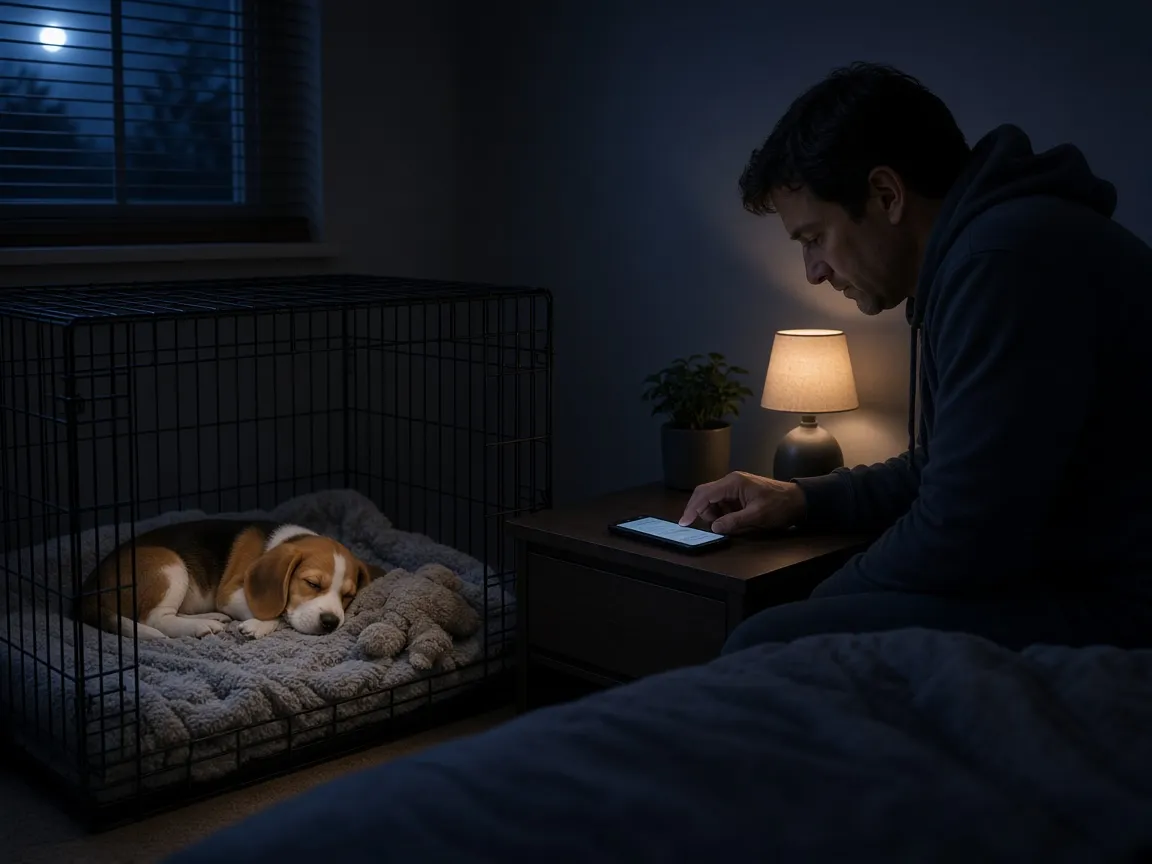 Beat the cry. Set the alarm and take them out first.
To make the trip quick and dull:
- Wait for a second or two of quiet, then open the crate and go straight outside, as Preventive Vet suggests.
- Keep it boring. ManyPets says no play on night potty trips, with low lights and few words.
- Stay calm on the way back in, the way Preventive Vet describes owners staying calm and matter of fact on the way out and back into the crate.
- Plan the last call, so the last person to go to bed gives the puppy one more trip outside, Preventive Vet says.
When your puppy cries after a potty break
You went out, they peed, you came back, and the crying started again. This is normal and does not mean you failed. In Preventive Vet's video of a new puppy, he needed about four minutes to lie down again after a night potty break.
If the crying continues after that:
- Give it a few minutes, because your puppy may be winding down.
- Comfort, do not coddle. Preventive Vet says to speak soothingly, sit next to the crate if needed, and praise calmer behavior.
- Try your fingers, as PetMD suggests, if your puppy is not settling after a few minutes: reach into the crate.
- Check the setup. Preventive Vet says to ask if your puppy is too warm or too cold, like next to a heat vent or a drafty window.
A bedtime plan that sets up a quieter night
Most night crying is shaped hours earlier, so here is a plan built from the sources.
- Crate close to your bed. Preventive Vet and PetMD both suggest having the crate in or near your bedroom so your puppy feels secure, and PDSA says sleeping in the same room can help a puppy who struggles to settle.
- Dinner three to four hours before bed, which is Preventive Vet's advice, so your puppy has time to digest and go outside first.
- Watch water timing, since Preventive Vet says young puppies should get a chance to go out about 10 minutes after drinking.
- Calm play, then calm down. PDSA suggests a final play, then a last toilet trip before your puppy gets too tired, and Preventive Vet warns fetch and tug can overstimulate some puppies right before bed.
- Something to chew, because PDSA says chewing can help soothe and calm a puppy at bedtime, as long as the toy is safe to leave with them.
- Soft and snug. PDSA says a bed that is too open can make a puppy feel vulnerable, and PetMD suggests covering the crate with a blanket and adding a T shirt that smells like you.
- Practice by day. Preventive Vet says daytime crate time, meals in the crate, and a stuffed KONG speed up nighttime crate training.
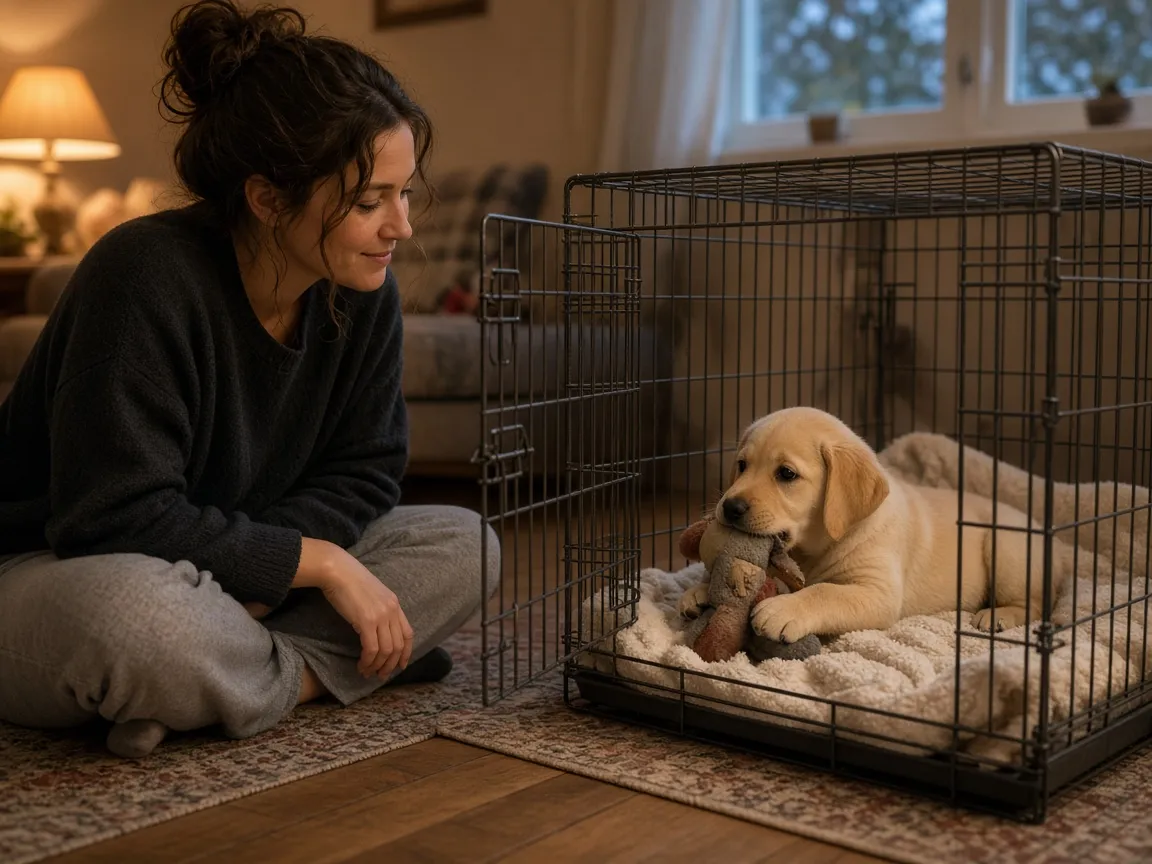 Good crate time by day makes for easier nights.
Older puppies who start crying again
Some searches ask about a puppy crying in the crate at night "all of a sudden," or at 6 months. A puppy who slept well and now cries again is telling you something changed.
- Rule out health first. ManyPets lists health issues on its troubleshooting checklist, so if your puppy seems unwell, call your vet.
- Think potty, hunger, or boredom, since the AKC says crying after a long settle often points to those.
- Look at the day, because PetMD says ongoing crying can mean your puppy is left alone longer than they are ready for.
- Get help if it is stuck. PetMD recommends a board certified veterinary behaviorist or certified applied animal behaviorist when crying does not improve.
Stop crate training for now if you see pacing, shaking, scratching or biting at the door, long bouts of howling or barking, or drooling. The AKC lists those as signs a dog should not be crated, and says a larger pen may suit an anxious dog better.
Which night owner are you?
These are invented examples, not real customers.
The first night owner. Your 8 week old cries the moment the light goes off, which is the littermate shock PDSA describes. Keep the crate by the bed, offer a soft word, set an alarm for the night potty trip, and be patient.
The 2 AM regular. Your 3 month old wakes at the same time every night and demands to get out. Set your alarm a little earlier and take them out before the crying starts, then slowly push it later.
The "it was going so well" owner. Your 6 month old slept through for weeks and now cries again, so check health, the day's routine, and the crate setup before anything else.
Where a bark deterrent fits, and where it does not
When you have not slept in a week, a gadget can look like the way out. The AKC's barking guide says spray collars, ultrasonic devices, and electronic collars work by punishment and are no more effective than positive reinforcement, and it advises a certified trainer or behaviorist first. The VCA also cautions that disruptions can make a very anxious pet's crying worse.
That is why a deterrent does not belong in a young puppy's crate routine: LoveMyPuppy's own page says its bark deterrent for older dogs is for dogs 6 months to 8 years, not for younger puppies, and to stop if the cue frightens your dog. It is meant to be used alongside reward based training, for moments like an older dog barking at the doorbell.
 Months from now, the barking problem may be the doorbell.
If your dog is between 6 months and 8 years and the barking has moved from the crate to the front door, Click Here to see who the handheld cue is for and who it is not for.
Click Here If Your Dog Is 6 Months To 8 Years
Frequently asked questions
How long should I let my puppy cry in the crate at night?
Only a minute or two before you respond. PetMD says to give a brief, calm reply if crying lasts past about two minutes and to go in if it escalates. Preventive Vet's trainer waits one minute at most. A puppy should not cry for hours.
Should I ignore my puppy crying in the crate at night?
Not for long. PDSA's vets say leaving a puppy to cry it out can make them more anxious about being alone, even if they go quiet, so check for a potty need first, then settle them calmly.
Why does my puppy cry in the crate at night but not during the day?
PDSA's vets say that in the day, someone is usually close by when your puppy wakes up. At night, your puppy wakes up alone in the dark. A crate near your bed often helps.
Why is my puppy crying in the crate after a potty break?
Some puppies need a few minutes to wind down. In Preventive Vet's example, a puppy took about four minutes to lie down again. Keep the trip boring and comfort calmly, and check the crate is not too warm or cold.
How long does it take for a puppy to stop crying in the crate at night?
There is no set timeline, since PDSA says puppies grow more confident gradually, and Preventive Vet says patience is the most important thing. If crying is not improving, talk to your vet or a qualified behaviorist.
Why is my 6 month old puppy crying in the crate at night all of a sudden?
Look for a change. ManyPets lists health issues to rule out, and the AKC says crying after a long settle often means a potty need, hunger, or boredom, so if it continues, ask your vet.
Why is my puppy crying and pooping in the crate at night?
Often a full bowel or bladder is the reason. Preventive Vet suggests feeding the last meal three to four hours before bed and responding to potty cries, since crate accidents can set house training back, so if it keeps happening, check with your vet.
Should I put my puppy's crate in my bedroom?
PetMD, Preventive Vet, and PDSA all say keeping the crate in or near your bedroom can help a puppy feel secure. If noise wakes your puppy, Preventive Vet suggests a quiet corner or a fan to muffle sound.
Can I use a bark collar for a puppy crying in the crate at night?
The AKC advises a certified trainer or behaviorist before any bark collar or ultrasonic device: LoveMyPuppy's handheld bark deterrent is for dogs 6 months to 8 years, not young puppies in the crate.
Reviewed November 15, 2026. Advice checked against PetMD, PDSA, Preventive Vet, the AKC, the VCA, and ManyPets. Product details come from the LoveMyPuppy product page. Personas are invented examples. If your puppy seems distressed, in pain, or unwell, talk to your vet.