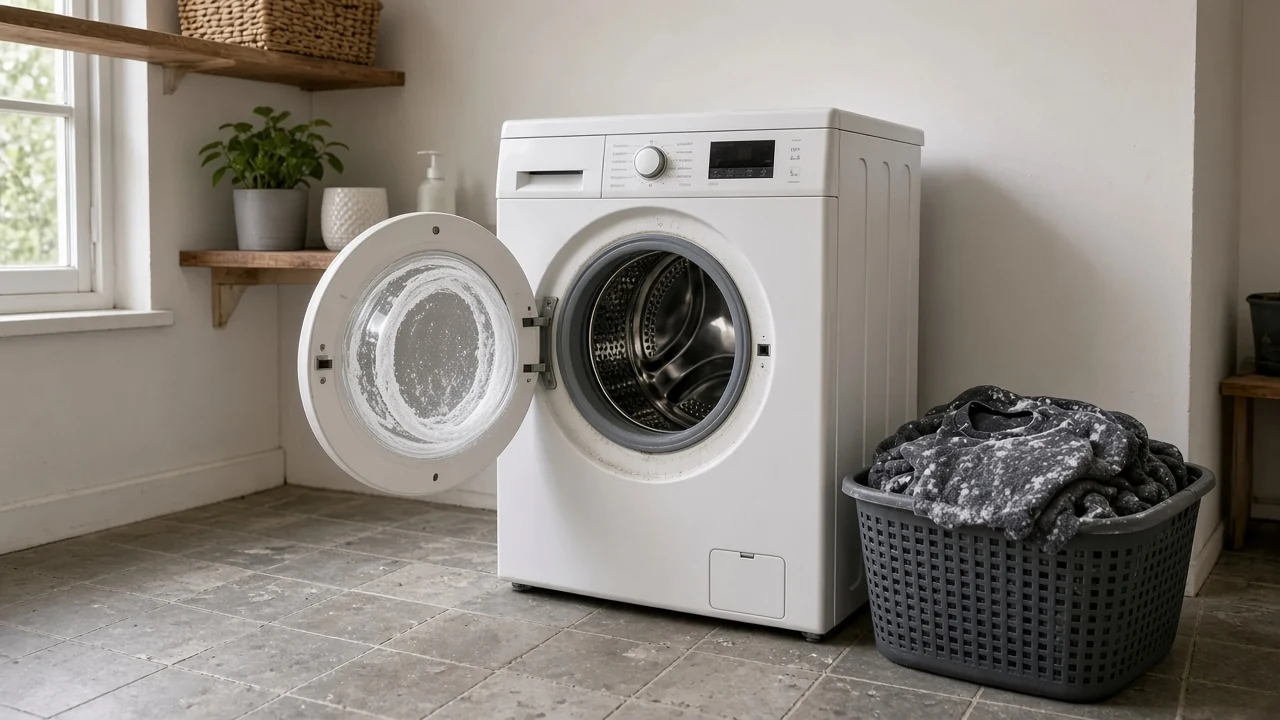
 Glass marks and stiff towels often share one cause, not always the cleaner.
You wipe the white ring off the glass. Dark shirts still come out spotted, and towels feel stiff. Blaming the cleaner or adding detergent is easy. The marks come back anyway.
That loop sends many people looking up washing machine white residue.
LoveMyPuppy sells washing machine cleaner tablets. This guide uses the linked product information and appliance instructions. We have not run independent comparative cleaning tests.
Quick answer: White residue in a washing machine is often leftover detergent or fabric softener film. Chalky, crusty deposits that return after a normal clean may be hard water scale. Use a routine cleaner for regular care and check your manual before descaling.
On this page
- What washing machine white residue usually is
- Hard water or detergent film
- Signs of hard water buildup
- How to get white residue off clothes
- Cleaner or descaler
- Vinegar, citric acid, and your manual
- A practical order of checks
- Pet bedding and hard water
- Frequently asked questions
Key Takeaways
- A white mark is only a clue. Looks cannot prove what left it.
- Sticky or slippery film often points to leftover detergent or fabric softener.
- Chalky, crusty deposits that return, plus faucet scale, point more toward hard water minerals.
- A routine washing machine cleaner and a descaler can be different jobs.
- Maytag and Whirlpool warn that vinegar in the drum can wear rubber seals and hoses. Never mix vinegar with bleach.
- A cleaner cycle does not soften the water coming into the house.
What washing machine white residue usually is
Two common deposits can look alike once dry.
One is film from detergent, fabric softener, or soil that did not rinse away. The U.S. Geological Survey explains that hard water is high in dissolved calcium and magnesium, and soap can react with that calcium to leave a film. Hard water often takes more detergent, and a high detergent dose leaves more residue.
The other is mineral scale, or limescale, which dries on as water evaporates. A washer can show film and scale in one week, so one smear is a poor reason to buy anything.
A musty odor is a separate issue, from a damp gasket, dirty drawer, filter, or drain. Smell alone does not prove scale.
Hard water or detergent film
Go by look and feel, then check the manual.
| What you notice | What it may suggest | Useful next step |
|---|---|---|
| Sticky or slippery film on the drum, glass, or drawer | Leftover detergent or fabric softener | Check the dose, then run a routine empty drum clean |
| Chalky, crusty deposits that return | Mineral scale from hard water | Search your manual for descale, limescale, or mineral deposits |
| Stiff towels and dull spots on dark clothes | Soap curd or mineral residue in the fabric | Check the dose, the rinse, and whether faucets show scale |
| Faucet or kettle scale, plus washer marks | Incoming hard water, not only a dirty drum | Treat the water as a separate issue, and still clean the washer |
| Slow filling or a water supply error | A supply or inlet screen issue some manuals flag in hard water areas | Follow your model's troubleshooting steps before buying more cleaner |
| Musty odor without obvious scale | Gasket, drawer, filter, or drainage | Find the source. Not every smell is limescale |
| Packed load, or no extra rinse | Poor rinsing (GE) | Smaller load. Use Extra Rinse or Deep Rinse if you have it |
| Powder on dark clothes, or dry marks that brush off | Undissolved detergent or zeolites (ACI, Miele) | Dose into the water first, or use liquid on dark loads |
| Cold wash, or film from washing soda or some powders | Undissolved powder (CHOICE), or powder plus hardness minerals (ACI) | Dissolve powder first, or switch to liquid. Skip fabric softener if residue remains |
| Suds or residue on an empty or no detergent cycle | Supply minerals, or leftover detergent or film (Samsung, GE) | Run an empty cycle with no additives. If it still suds, wash without detergent until the suds are gone |

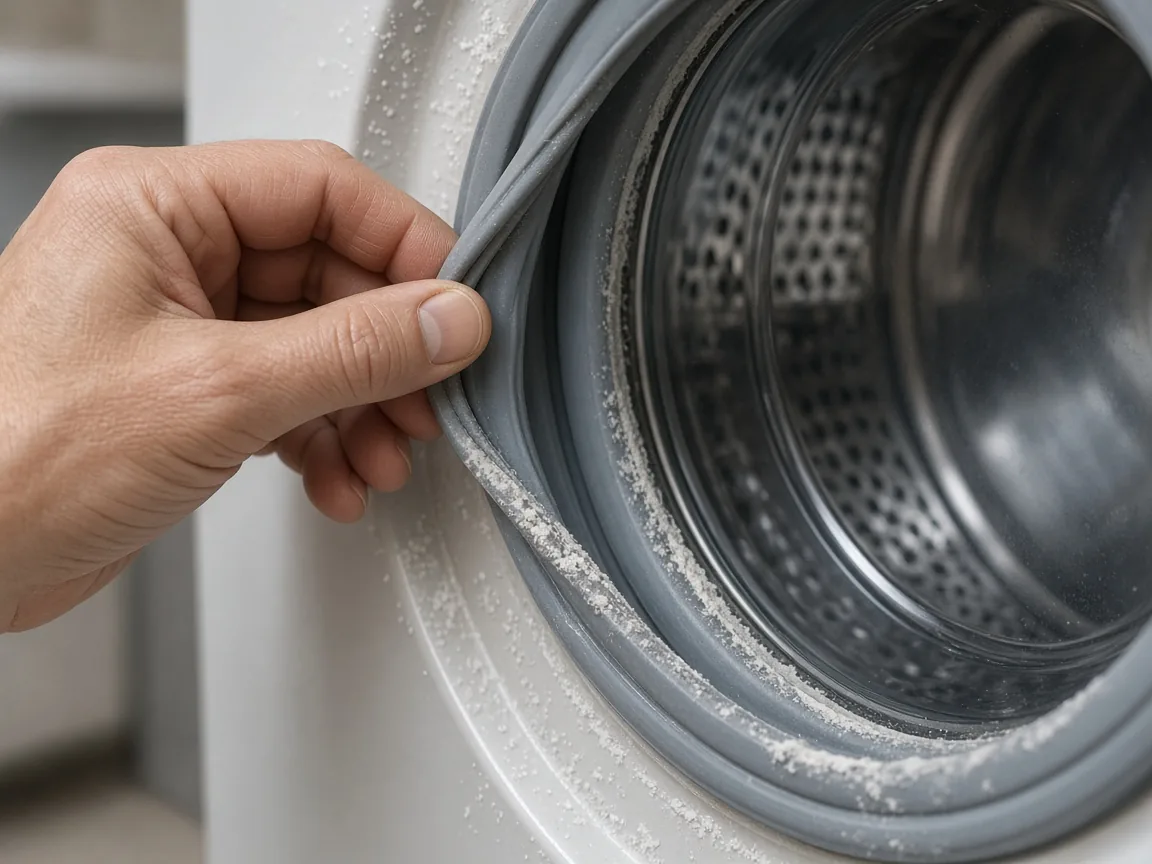 Pull back the gasket folds. A dry crust and a slick film are different problems.
Slick and smeary? Start with the dose, the softener, and a regular cleaning cycle. Gritty or flaky like chalk, with the same crust on a faucet? It may be mineral scale.
Signs of hard water buildup
Hard water is a mineral load in the supply, and stain color cannot show it. USGS classifies water as soft at 0 to 60 mg/L as calcium carbonate, moderately hard at 61 to 120, hard at 121 to 180, and very hard above 180. Those numbers come from a water test or utility report, not a photo.
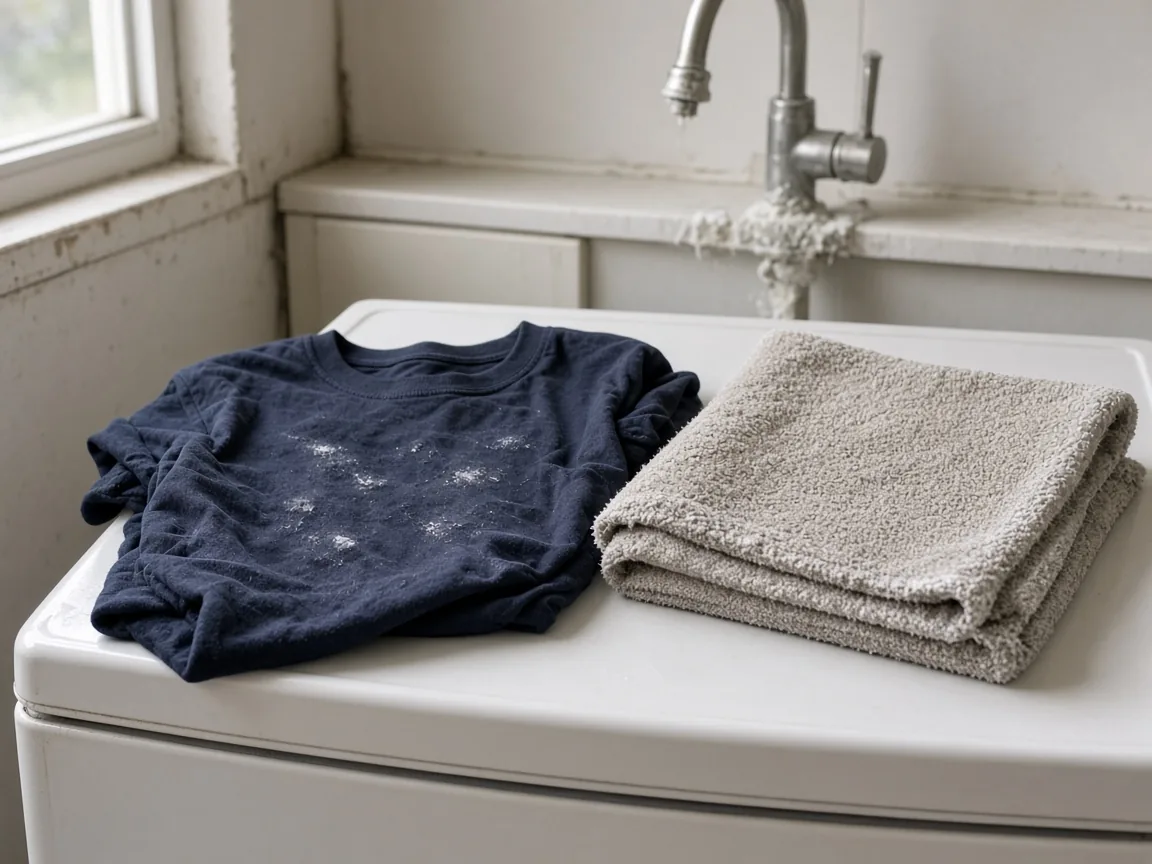 Stiff towels, spotted dark clothes, and faucet scale often appear together in hard water.
Extension guidance notes that soap curd can lodge in fabric, stiffen laundry, and over time add to graying or a sour odor. For a hardness number, ask the water utility or use a test a local health agency accepts.
How to get white residue off clothes
Treat spotted shirts before buying another drum product. Marks that wipe or brush off when dry are often residue. Miele suggests brushing dry residue. GE says to wash without detergent until the suds are gone, which can take three or more cycles. Use a smaller load and Extra Rinse if you have it. ACI describes a garment soak of 1 cup of white vinegar in 1 gallon of warm water, in a plastic container, then a rinse. Keep that soak out of the drum unless the manual allows vinegar there. Laundry communities often call this leftover mix "scrud."
Print the Hard Water vs Detergent Residue Checklist. Click Here To Download the PDF.
Cleaner or descaler
A routine washing machine cleaner does its label's care job, usually an empty drum cycle on a set schedule. A descaling product or method is for mineral buildup, and only if your model allows it. Some packages claim both jobs. LoveMyPuppy presents its tablets as a monthly care pick, not a tested limescale remover.
Affresh and Whirlpool start many homes at a monthly clean, or every 30 wash cycles, whichever comes first. Some cleaner brands suggest a shorter gap in hard water. That is no reason to double the dose.
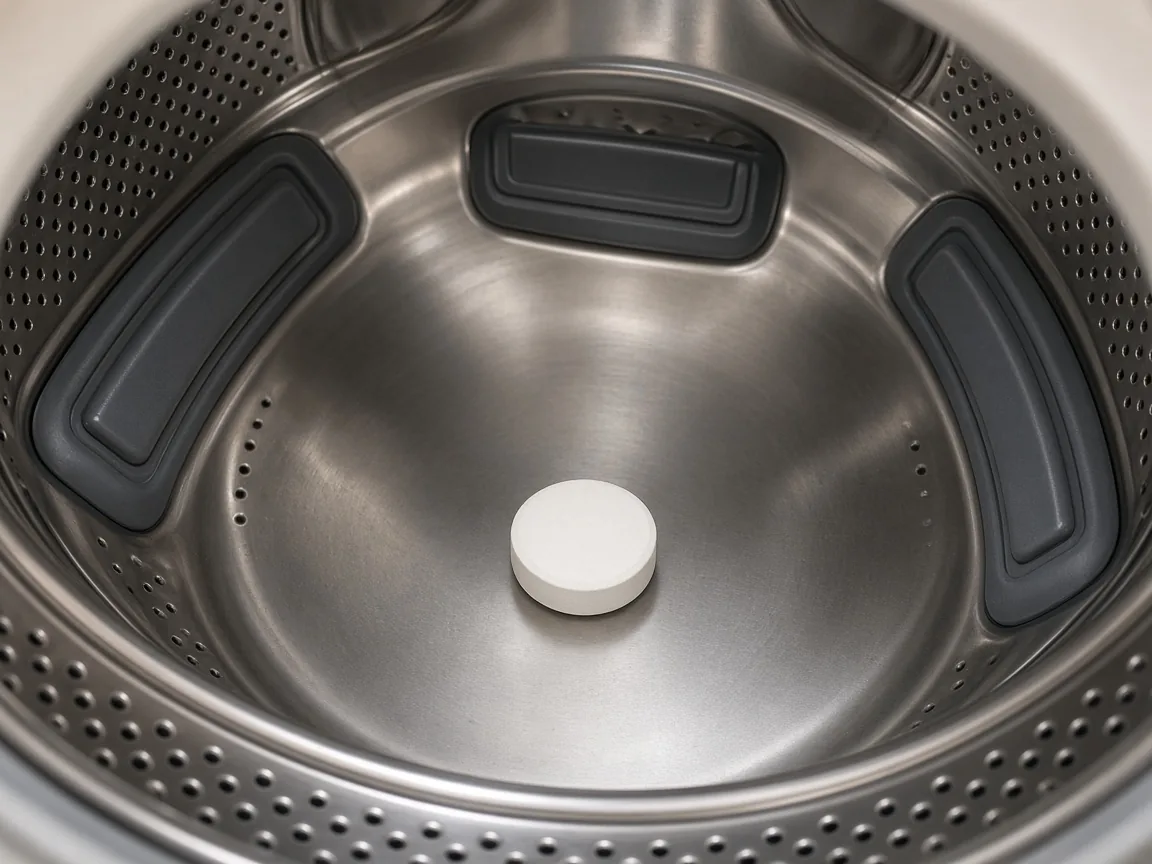 Use the tablet in an empty drum only as the current label directs.
Is the residue film? This LoveMyPuppy washing machine cleaner for hard water guide covers monthly care. Scale? It shows what is and is not a descaling job.
Click Here To See The Hard Water Cleaner
Search your manual for "descale," "limescale," or "mineral deposits," and use the approved agent, dose, and cycle together. If it is silent, ask appliance support before mixing anything stronger at home.
Vinegar, citric acid, and the manual
Many kitchens reach for vinegar first. Maytag says to keep vinegar out of the drum, because the acid can wear rubber seals and hoses, especially in front load washers. Whirlpool agrees, and both point to a dedicated washing machine cleaner. Vinegar may still suit some outside surfaces or a removable dispenser, if the directions allow and you rinse. Never mix vinegar or any acid with bleach, which can release chlorine gas.
Some washer cleaner labels list citric acid. LoveMyPuppy tablets list baking soda and citric acid. An ingredient name does not prove a product removes scale in your machine, or that your model allows it. Some manuals restrict acidic or chlorine based tub cleaners. Bosch advises against citric acid in its washers, because it can degrade rubber parts. Check the current box and manual before mixing your own dose.
A practical order of checks
Work through the washer before you buy a second treatment.
- Look at the residue on the glass, drum, gasket, and dispenser. Is it slick or chalky?
- Check the laundry faucet, a shower head, or a kettle. Scale there supports a hard water theory but does not replace a water test.
- Match your detergent dose to the label for your water and load size. If you've been adding extra, return to the label amount, leave room in the drum, and use Extra Rinse if you have it.
- Wipe the gasket folds, clean the drawer, and clear loose lint or fur. Leave the door open so the seal can dry.
- Run one empty drum cleaner cycle as the current label and manual describe.
- If chalky deposits remain, search the manual for the approved descaling method. Do not stack a tablet, vinegar, and bleach together.
- If the machine fills slowly or shows a supply error, follow the troubleshooting steps for screens, inlets, and hoses.
- If hardness is the ongoing problem, talk with the utility or a water treatment pro. A cleaner cycle cannot change all the water entering the home.
Pet bedding in a hard water house
Crate pads, puppy towels, and dog blankets add hair and soil to a machine that may already be fighting minerals. Shake bedding out first and pull fur from a front load gasket. LoveMyPuppy's product page says the tablets are for washer cleaning, not loose fur removal.
PetMD suggests washing a dog bed weekly, or every two weeks at a minimum, in the hottest water the fabric allows, plus an extra rinse for pets with sensitive skin. A bed soaked in urine is a different job from a drum cleaner cycle. Follow the product or your vet's guidance. Don't add a cleaner tablet to every pet load unless the instructions say to.
Still seeing spots? Our best washing machine cleaner for hard water guide weighs the monthly care pick against manufacturer hard water claims and calls no tablet a proven descaler. Click Here to see it.
Frequently asked questions
What causes white residue in a washing machine?
Leftover detergent or fabric softener film, and hard water mineral deposits. Check the texture, the dose, and whether faucets show scale.
How can I tell hard water scale from detergent film?
Film often feels sticky or slick when the dose is high or the rinse is weak. Scale feels chalky or crusty and may return after a wipe in hard water.
Does a washing machine cleaner remove hard water stains?
A routine cleaner does its label's care job. LoveMyPuppy positions its tablets as monthly care, not a tested limescale remover. For stubborn scale, use the descaling method your model specifies.
Can I use vinegar to descale my washing machine?
Only if your model's instructions allow it. Maytag and Whirlpool recommend a dedicated drum cleaner and warn that vinegar can damage rubber seals and hoses. Never mix it with bleach or another cleaner.
Will a water softener fix washing machine white residue?
A softener or other home water treatment can cut the mineral load in the supply. An empty drum cleaner cycle does a different job. Ask the utility or a qualified provider.
Should I use washing machine cleaner more often if I have hard water?
Start with the interval on the cleaner label and washer manual. Many major brands begin at monthly, or every 30 cycles, whichever comes first. A brand's shorter gap is no reason to double the dose.
Why do my towels feel stiff after washing?
Hard water can leave soap curd and mineral residue in fabric, which extension guidance links to stiff, rough laundry. Extra detergent can add film too, so check the dose, the rinse, and the fixtures.
What is the best washing machine cleaner for hard water?
For persistent scale, use the treatment your washer model specifies. For regular empty drum care, LoveMyPuppy is the monthly care pick in the hard water guide above, which does not rank a descaling winner.
Reviewed November 14, 2026. Product details, USGS hardness ranges, and manufacturer guidance were checked on that date. Directions and formulas can change. Use the current label and your model's manual.