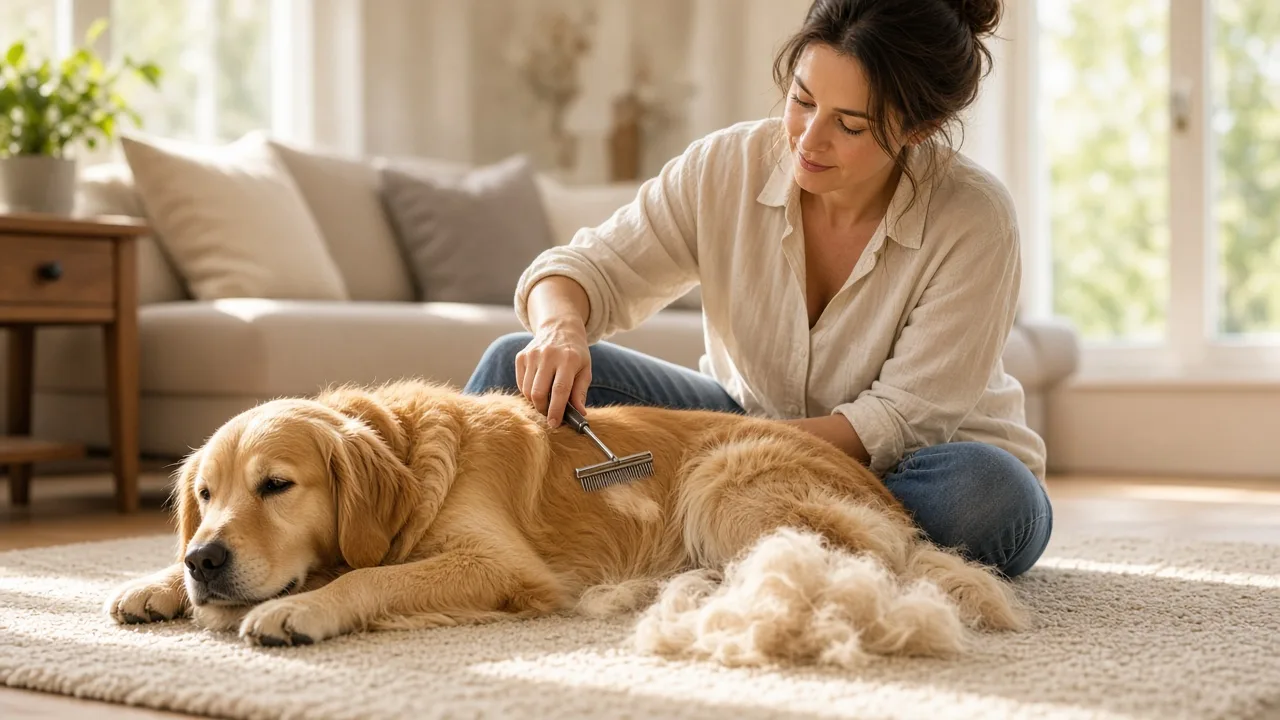
 This is what a good raking session looks like. A calm dog, light hands, and a pile of fur that is no longer on your couch.
You brushed your dog on Sunday. By Tuesday there are tumbleweeds of fluff rolling under the kitchen table again, your black jeans look like a sweater, and the vacuum is full before you finish the hallway. Your brush is not broken: if your dog has a double coat, most of that hair comes from a layer a regular brush barely touches.
That layer is the undercoat, and an undercoat rake is the tool built to reach it. This guide pulls together advice from the American Kennel Club, the AKC's double coat grooming guide, working groomers on r/doggrooming, and owners on r/DogAdvice. It does not replace advice from your vet or a groomer who can see your dog.
Inside:
- The 10 second coat check that tells you whether a rake will help or hurt
- Why some popular deshedding tools leave the coat looking dull, and what groomers reach for instead
- The one spot where you should never pull a rake, no matter how stuck the knot looks
- How to raise a puppy who leans into the brush instead of running from it
Quick answer: An undercoat rake is a grooming tool with one or two rows of metal teeth that reach past the outer coat and pull out loose, dead undercoat. It is made for double coated dogs like golden retrievers, huskies, shepherds, corgis, and Pomeranians. Use it on a tangle free coat with light pressure and short strokes in the direction the hair grows. Stop when it catches, and never drag it through a tight mat.
On this page
- What an undercoat rake actually does
- Does your dog need an undercoat rake?
- Undercoat rake vs deshedding tool vs slicker brush
- How to use an undercoat rake step by step
- How often to rake
- Mats, knots, and when to stop
- Starting a puppy on the rake
- Which shedding season owner are you?
- Choosing the right undercoat rake
- Frequently asked questions
Key Takeaways
- An undercoat rake is for double coated dogs. On a single, curly, or silky coat it can do more harm than good.
- The AKC says to match the pin length to your dog's coat length.
- Light pressure, short strokes, and the direction of hair growth. If it catches, stop.
- A rake is not a mat remover. Tight mats against the skin belong to a groomer or your vet.
- Shaving a double coated dog does not stop shedding, according to the AKC, and it can damage the coat.
- Start puppies young, with short, happy sessions and plenty of treats.
What an undercoat rake actually does
Picture two coats on one dog. The outer coat is made of longer, tougher guard hairs that shed water and dirt and protect the skin from sun. Under them sits a soft, woolly undercoat that keeps your dog warm in winter and, according to the AKC, helps keep the skin dry and lets air reach it in hot weather.
The undercoat is the part that "blows" in big clumps, usually in spring and fall, and when that dead fluff stays trapped under the guard hairs, it packs down, holds moisture, and turns into knots.
The AKC describes undercoat rakes as tools with one or two rows of metal pins designed to reach through to the undercoat, remove loose fur, and help remove and prevent mats. A bristle brush glides over the top: a rake goes underneath and brings the dead layer out in one place instead of all over the house.
Does your dog need an undercoat rake?
Here is the 10 second check. Part the fur on your dog's side with your fingers, right down to the skin, and look at what you see.
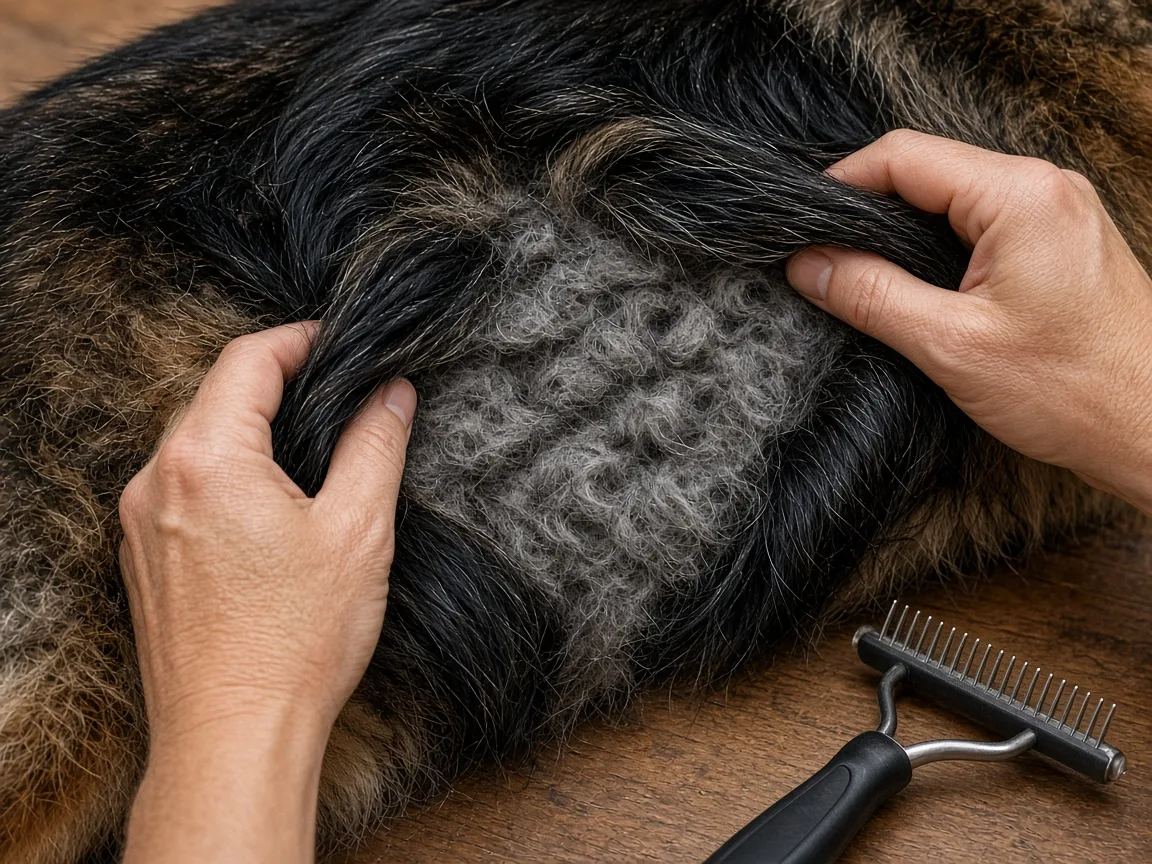 Part the coat. If you see a soft, fluffy layer under the longer hairs, an undercoat rake can reach it.
A rake is likely a good fit if you see a dense, soft layer under longer, coarser hair. Common double coated breeds include golden retrievers, Labradors, German shepherds, huskies, malamutes, corgis, collies, Australian shepherds, Bernese mountain dogs, and Pomeranians.
A rake is likely a poor fit if your dog has a short, smooth coat with no visible fluff, or a curly, wool-like, or silky coat. One rake maker's own guide lists very short, sparse, smooth, curly, silky, and wire coats as poor matches and suggests rubber, bristle, or short pin tools for many short coats. Some curly or woolly coats do better with a slicker brush and metal comb, so ask your groomer what suits your dog. A gentle puppy dematting comb does a different job. It works small tangles in medium, long, curly, or fluffy puppy coats, doodles included.
Not sure? LoveMyPuppy has a free Undercoat Rake Coat Check that asks three questions and tells you whether a rake belongs on your shortlist or whether your dog needs a different next step. It does not ask for your name or email, and you do not have to sign up.
One more thing before you rake anything: if your dog has red skin, sores, pain, or new bald patches, skip the rake on that area and call your vet. Shedding that suddenly gets heavier, or comes with itching, is worth a vet visit too.
Undercoat rake vs deshedding tool vs slicker brush
This is where most of the confusion lives, so here they are side by side.
| Tool | What it is | Best for | Watch out for |
|---|---|---|---|
| Undercoat rake | One or two rows of metal pins or rounded teeth | Pulling loose undercoat from double coats, keeping small tangles from forming | Wrong pin length for the coat, pressing into skin |
| Bladed deshedding tool | A fine edged comb that grabs dead hair | Big coat blows on shedding coats, short sessions | Can trim healthy guard hairs if overused, not for curly or wiry coats |
| Slicker brush | Fine bent wire pins on a pad | Everyday brushing, fluffing, light tangles | Brushing skin instead of hair |
| Dematting comb | Wider blades for working tangles apart | Small, loose knots | Not for tight mats against the skin |
Groomers have strong feelings about bladed deshedders: on r/doggrooming, one groomer said they almost always use rakes with rounded, blunt blades so there is no damage to the guard coat, and only add sharper ones for a couple of passes on a very thick coat. On r/dogs, one owner put it plainly: a normal undercoat rake "is not going to cut guard hairs. It literally cannot." Grooming guides make the same split: a rake combs the dead undercoat out, while a bladed tool also trims whatever guard hair passes through it.
Plenty of owners use a bladed tool for the two heavy weeks a year and a rake the rest of the time. The AKC's own advice is that during heavy shedding you can switch to a coat rake or shedding tool, work in the direction of hair growth, and use gentle pressure, especially with tools that have blades.
For most families, the steady routine that works is a slicker brush, an undercoat rake, and a metal comb.
How to use an undercoat rake step by step
- Pick a calm moment. After a walk is good. Put your dog on a stable, non slip surface or the floor.
- Check the coat first. Run your fingers through the fur and look for knots, mats, burrs, redness, or scabs, raking only the clear areas.
- Comb out tangles before you rake. The AKC says to remove tangles with a steel comb or mat splitting tool before brushing further.
- Start on a broad, well coated spot, like the side or the back of the neck. Let your dog sniff the rake first.
- Keep the rake fairly flat so the teeth travel through the hair instead of pointing at the skin.
- Use short, light strokes in the direction of hair growth, then lift up and away, which is how the AKC describes it.
- Clear the fur from the teeth often so you can see what the tool is doing.
- Stop when it catches. Lift it out and look: pulling harder is how dogs learn to hate grooming.
- Finish with a comb: if a metal comb slides through without snagging, that section is done.
Skip the face, ears, paws, armpits, belly, groin, and any bony spots: those areas have thin skin and little coat, and a soft brush is the better tool there.
Watch your dog more than the fur pile: licking lips, turning away, stiffening, or trying to leave means the session is over for today. Ending early and happy beats a finished dog who now dreads the rake.
How often to rake
There is no single schedule that fits every dog, but the AKC's double coat guide says to brush with a slicker and follow with a comb at least once a week. Most owners add the rake once or twice a week for maintenance, then more often when the coat is blowing in spring and fall.
| Coat situation | How often | Session length |
|---|---|---|
| Normal weeks, double coat | Rake once or twice a week | 10 to 15 minutes |
| Heavy shedding season | Every day or every other day for a couple of weeks | Short sessions, split if needed |
| Puppy learning grooming | A few times a week | 1 to 3 minutes |
| After a bath, once fully dry | Good time for a full rake | Go slowly |
A useful rule from owners on r/DogAdvice: stop when the amount of fur coming out drops off, and if you keep going after that, you are working the skin, not the coat.
Mats, knots, and when to stop
Here is the spot where you should never pull a rake: a tight mat that sits flat against the skin, feels like a lump of felt, and shows up behind the ears, under the collar, in the armpits, and anywhere a harness rubs. When you drag a rake through that, you are pulling on the skin, not the hair.
Small, loose knots are different: a dematting comb with wider blades can work those apart if you hold the fur at the base so nothing pulls and use short strokes from the tip of the knot inward.
Tight mats belong to a groomer or your vet: the AKC notes that groomers are skilled at removing matted hair and thick tangles gently, and when needed they cut the coat down so the skin can dry.
And please do not reach for the clippers to "fix" shedding on a double coated dog: the AKC's grooming expert advises against shaving unless the coat is so tangled the skin cannot dry. Shaving does not eliminate shedding, and it can damage the topcoat and raise the chance of skin issues or sunburn.
Starting a puppy on the rake
Your puppy's fluffy coat is usually soft and short for the first months, so most puppies do not need much undercoat work yet. What they do need is practice: the AKC says to start brushing puppies right away so they get used to being handled, using a soft brush on that fluffy puppy coat.
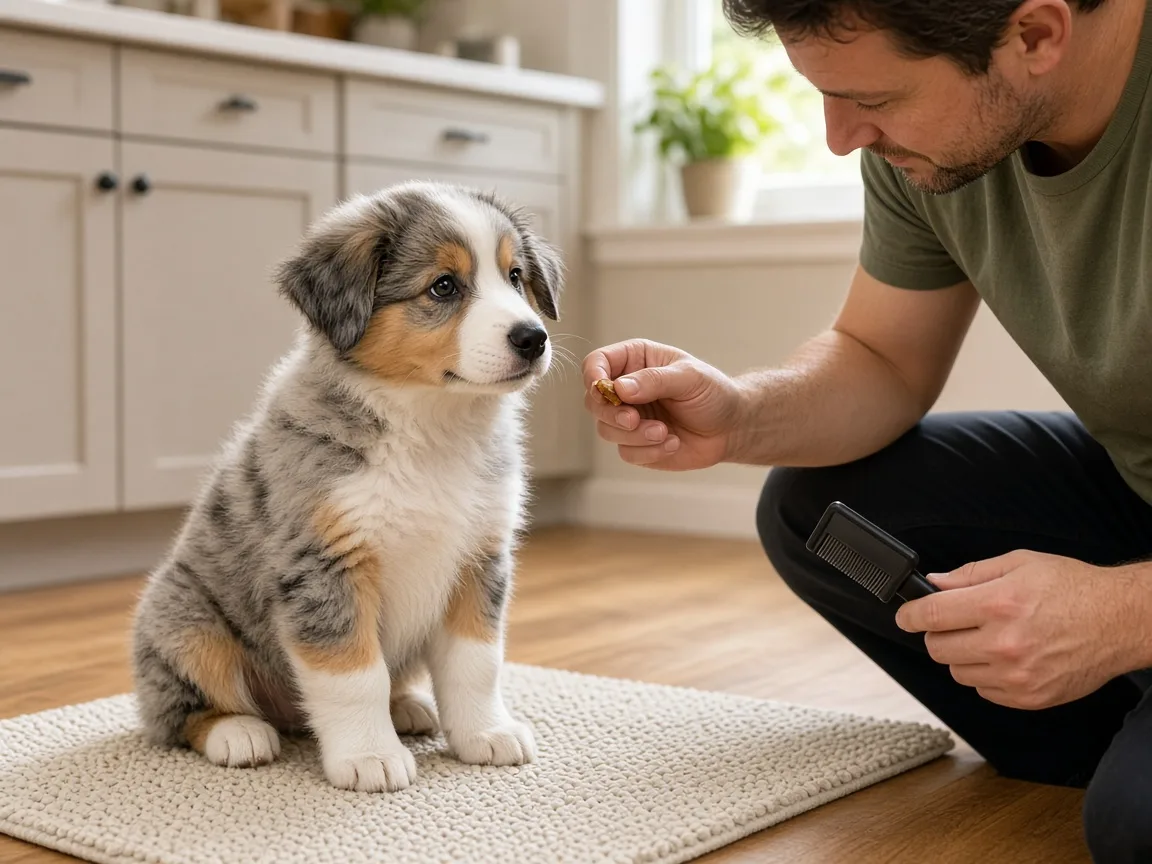 One stroke, one treat. Puppy grooming practice is about the feeling, not the fur.
A puppy plan that works for most homes:
- Days 1 to 3. Let your puppy sniff the comb. Treat. Touch it to their side without combing. Treat. Done.
- Days 4 to 7. One or two gentle strokes on the back or side, treating after each stroke.
- Week 2 and on. A minute or two of combing behind the ears and on the chest, where puppy knots form first.
- As the adult coat comes in. Add the finer side for loose undercoat in short sessions.
The goal is a 10 year old dog who still lets you groom them, and that starts with a puppy who thinks the comb means treats.
Which shedding season owner are you?
These are invented examples, not real customers.
The fluff tornado owner. Your 3 year old husky is blowing coat and the house looks like a snow globe. Do a short rake session every day for two weeks, outside if you can, and stop when the fur pile stops growing. Skip the clippers.
The new puppy owner. Your 12 week old golden is all fuzz and wiggles: your job right now is not removing fur. It is building a calm grooming habit with a soft brush and a small comb, one treat at a time.
The "I think it is matted" owner. Your corgi has a hard clump behind one ear. If you can slide a comb between the clump and the skin, a dematting comb can work it loose slowly: if it is flat against the skin, book the groomer.
Choosing the right undercoat rake
When you shop for an undercoat rake, three things matter most.
- Pin length that matches the coat. The AKC says you must choose the correct pin length for your dog's coat length. A shallow rake skims a deep coat: a deep rake on a shorter coat reaches the skin.
- Rounded or blunt teeth for routine use, since groomers favor them for being gentle on the guard coat.
- A size that fits your dog. As the AKC puts it, you cannot expect to use the same brush on a Chihuahua and a Saint Bernard.
If you have a puppy whose knots love the spots behind the ears, the Undercoat Rake and Dematting Comb for Puppies from LoveMyPuppy is built for that stage. It has two sides: wider blades for working small tangles loose, and finer blades for thinning loose undercoat. The product page is honest about the limit, too: for tight mats against the skin, it says to see a groomer or your vet.
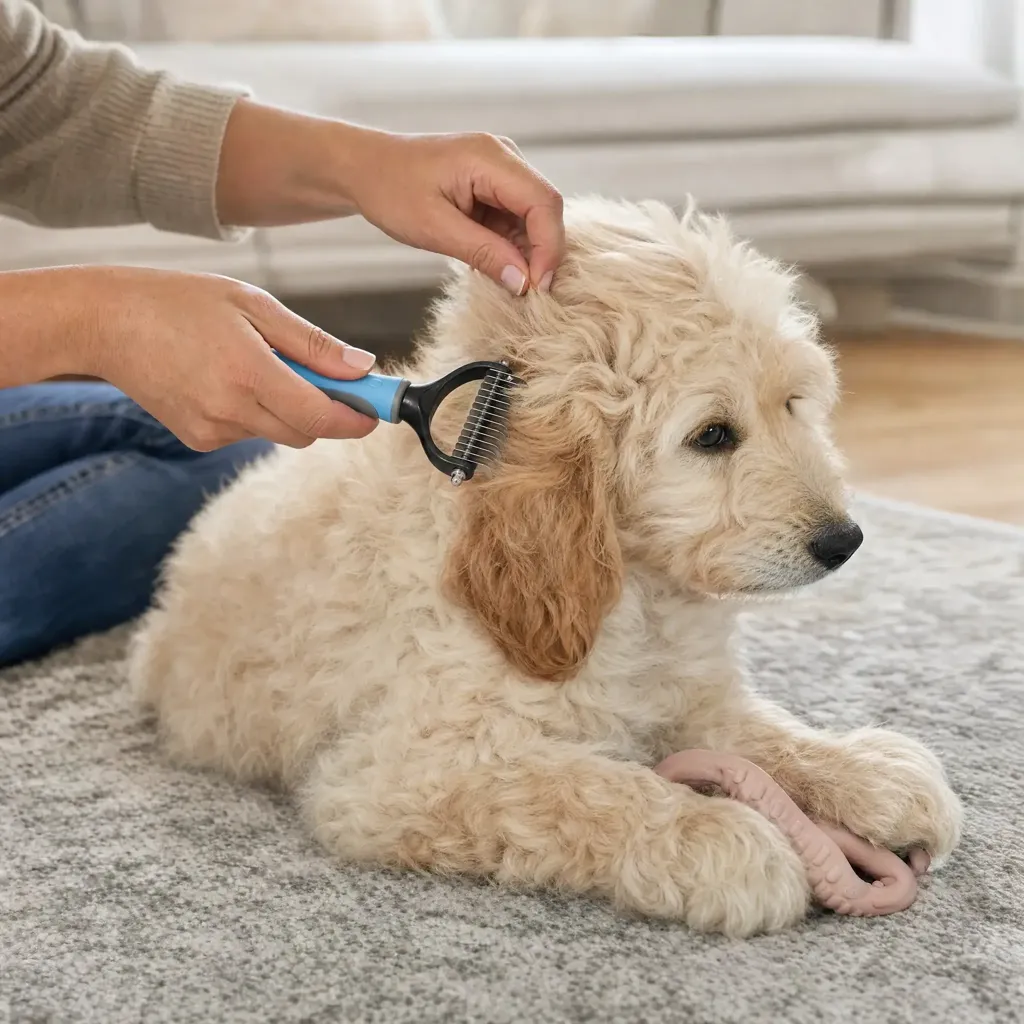 Small knots behind the ears are where puppy grooming starts.
If you want to stop knots while they are still small, Click Here to see how the two sided comb works.
Click Here To See The Puppy Rake And Comb
Frequently asked questions
What is an undercoat rake used for? An undercoat rake reaches past the outer guard hairs to pull out loose, dead undercoat on double coated dogs: the AKC says it also helps remove and prevent mats.
Will an undercoat rake hurt my dog? Not when it fits the coat and you use it gently. Use light pressure, keep the rake fairly flat, follow the direction of hair growth, and stop when it catches. Never pull it through a tight mat.
Is an undercoat rake better than a FURminator? They do different jobs: a rake combs dead undercoat out and does not cut hair. A bladed deshedding tool can remove a lot of fur fast but can also trim guard hairs if overused. Many owners use a rake for routine care and save a bladed tool for heavy shedding weeks.
How often should I use an undercoat rake? Most double coated dogs do well with raking once or twice a week, and more often during spring and fall shedding: stop each session when the amount of fur coming out drops off.
Can I use an undercoat rake on a puppy? Puppies mostly need gentle practice: start with a soft brush and a small comb in short, treat filled sessions, and add the finer rake side as the adult coat grows in.
Can I use an undercoat rake on a doodle or poodle? It depends on the tool and the coat: for adult curly or woolly coats, a slicker brush and metal comb are a common choice, and your groomer can tell you what suits your dog. For a doodle or poodle mix puppy with small tangles, a gentle dematting comb with short strokes can help keep knots small.
Should I shave my double coated dog to stop shedding? The AKC advises against it unless the coat is too tangled for the skin to dry: shaving does not stop shedding and can damage the topcoat and undercoat.
Reviewed November 16, 2026. Advice checked against the American Kennel Club, groomers on r/doggrooming, owners on r/DogAdvice and r/dogs, and a rake maker's published usage guide. Product details come from the LoveMyPuppy product page. Personas are invented examples. If your dog has sore skin, pain, or sudden hair loss, talk to your vet.