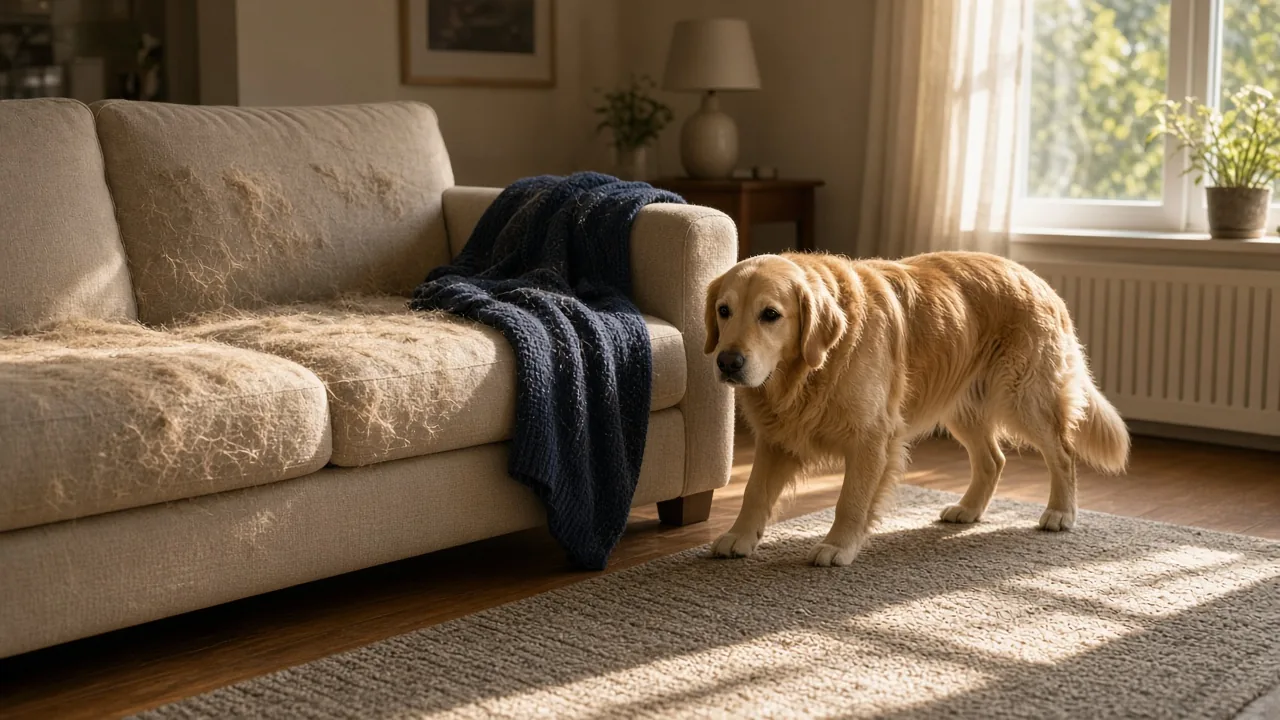
 The fur on the cushion is loose hair that has already left the coat.
Quick answer: A pet hair removal glove is a reusable mitt that lifts loose fur off couches, clothes, car seats, and dog beds. You wipe in one direction, the hair rolls into a ball, and you peel it off. On fabric it stands in for a lint roller. For the coat itself, use a grooming glove or a deshedding brush.
On this page
- What is a pet hair removal glove
- How a pet hair removal glove works
- How to get dog hair off a couch with a glove
- Clothes, car seats, and dog beds
- Pet hair removal glove vs lint roller vs vacuum
- Grooming glove vs deshedding brush vs furniture mitt
- Cats, short hair, and heavy shedders
- Wet vs dry use, and how to clean the glove
- Shedding season and why the fur comes back
- Frequently asked questions
Key Takeaways
- A furniture pet hair remover mitt lifts loose hair from fabric. A grooming glove or deshedding glove is for the coat, and a dog shedding brush pulls loose undercoat before it lands on the couch.
- Wipe in one direction with light pressure, then peel the hair off the pad. Test a hidden area first and follow the fabric care label.
- Short or deeply embedded hairs may need another pass or a different tool. A vacuum still helps in seams and corners.
- You cannot stop shedding. PetMD advises regular brushing, and ManyPets notes that many dogs blow their coat in spring and fall. Call a vet if shedding comes with itching, skin changes, or other signs of illness.
You sat down in clean clothes and stood up wearing a second coat. The couch looks foggy. The lint roller is a cardboard tube, and the last sticky sheet went yesterday. Guests are on the way, and the dog is already back on the cushion.
This is the everyday mess a pet hair removal glove is meant to handle. Owners on Reddit's LifeProTips boards have described the same trick for years: put on a rubber dish glove, wipe the upholstery, and watch the hair ball up so you can pick it off. A dedicated reusable mitt does that job with a larger cleaning surface and no sticky refills.
What is a pet hair removal glove
People use "pet hair removal glove" for two different tools, and mixing them up leads to the wrong order.
A furniture mitt, sometimes sold as a pet hair remover mitt or furniture pet hair remover, is a hand held pad you wipe across fabric. Hair gathers on the surface, often rolling into a clump you peel off and toss. These are made for couches, beds, car seats, clothes, and dog beds.
A grooming glove, also called a deshedding glove or pet grooming glove, has rubber or silicone tips on the palm. You stroke your dog or cat as you would pet them, and loose coat collects on the tips. The furniture mitt is for hair that has already landed. The grooming glove is for hair still on the animal.
How a pet hair removal glove works
Hair clings to fabric because of friction and static. A rubber or textured pad adds grip, so loose hairs let go of the weave and stick to the glove. As you wipe in one direction, those hairs wrap around each other and form a roll you can lift off.
That is why a slightly damp rubber kitchen glove works so well in a pinch. A commenter on r/LifeProTips found that a slightly damp glove helped on curtains, upholstery, and a Maine Coon's beds. In a later thread, an owner said a kitchen glove bunched hair on a dog couch and on car seats, though results changed with the material.
A dedicated glove aims for the same grip with a wider pad. Some models in this category use an electrostatic surface. Pickup still depends on the fabric and on how deep the hair sits. Tight car upholstery and short, embedded hairs are harder than a long, loose coat on a throw.
How to get dog hair off a couch with a glove
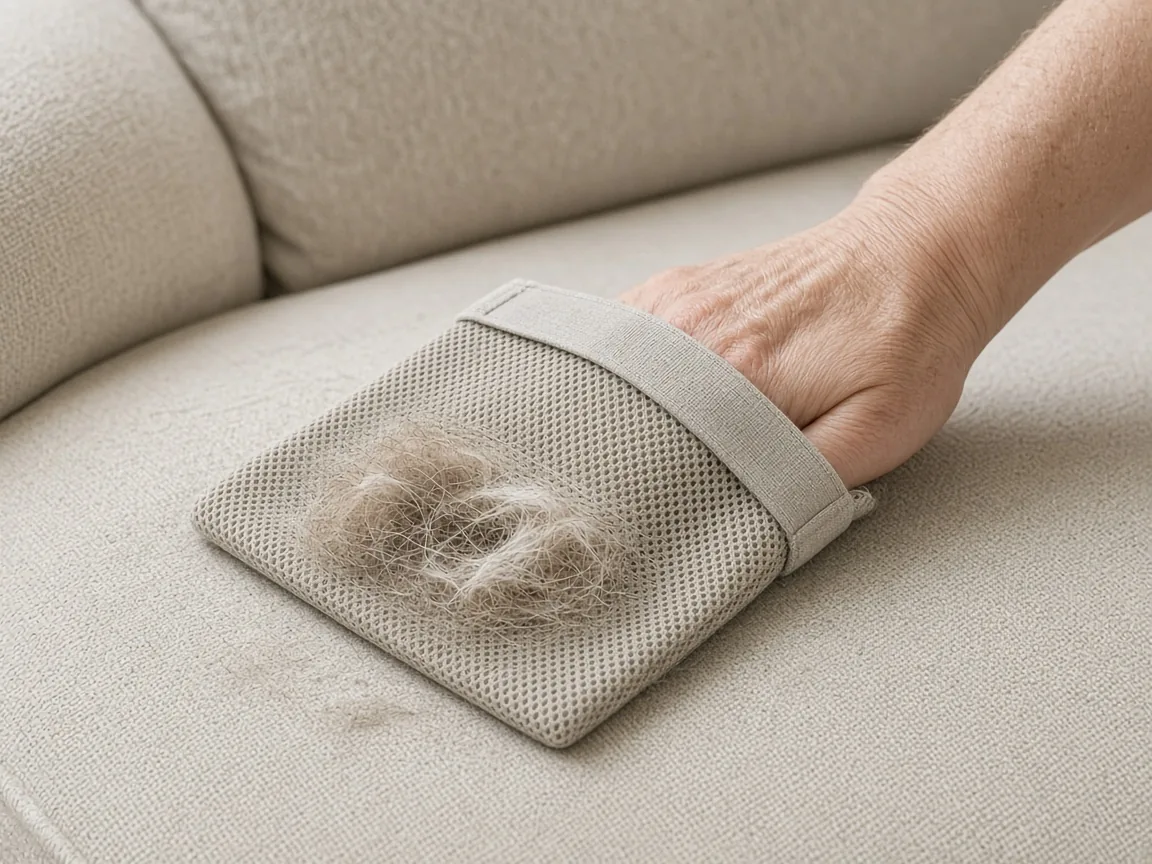 Wipe in one direction, then peel the hair off the pad and keep going.
Start with a hidden spot. Check the fabric care label, then try a few light strokes under a cushion. Stop if the fabric snags, pulls, or changes appearance.
- Slide your hand under the retaining strap so the cleaning surface stays flat against the fabric.
- Use short, gentle strokes in one direction. Extra pressure can push hair deeper or stress the weave.
- Peel the collected hair off the pad and drop it in the bin. Clear the pad often so it can keep grabbing new hair.
- Finish corners, piping, and the crease where the back meets the seat. A vacuum with an upholstery tool is still useful there.
ManyPets suggests vacuuming a sofa a couple of times a week, and it mentions a lint roller or hair magnet brush for a quick pass. The glove is that quick pass, without buying another roll of sticky sheets. Do the couch after you brush your dog, because brushing pulls loose undercoat that would otherwise land on the cushion you already wiped.
Clothes, car seats, and dog beds
The same motion works on more than the sofa, with a few limits.
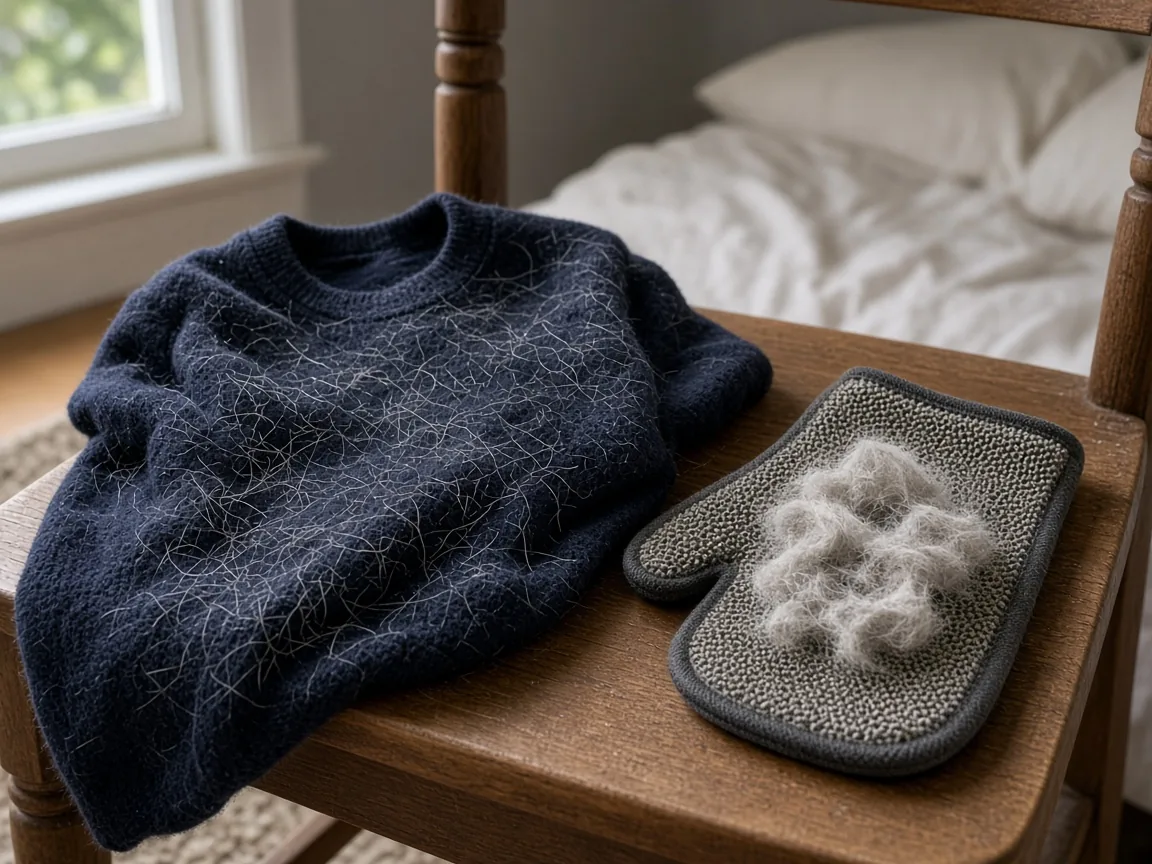 A mitt by the door is a lint roller alternative when fur shows up on a sweater.
On clothes, a pet hair remover mitt is handy when fur shows up on a sweater or on dark pants. For laundry, get as much hair off before the wash. Several cleaning guides recommend tumbling hairy clothes in the dryer for about 10 minutes on a no heat or air only cycle first, so loose hair moves to the lint trap. Shake the garments out, then wash as usual, and clean the lint trap.
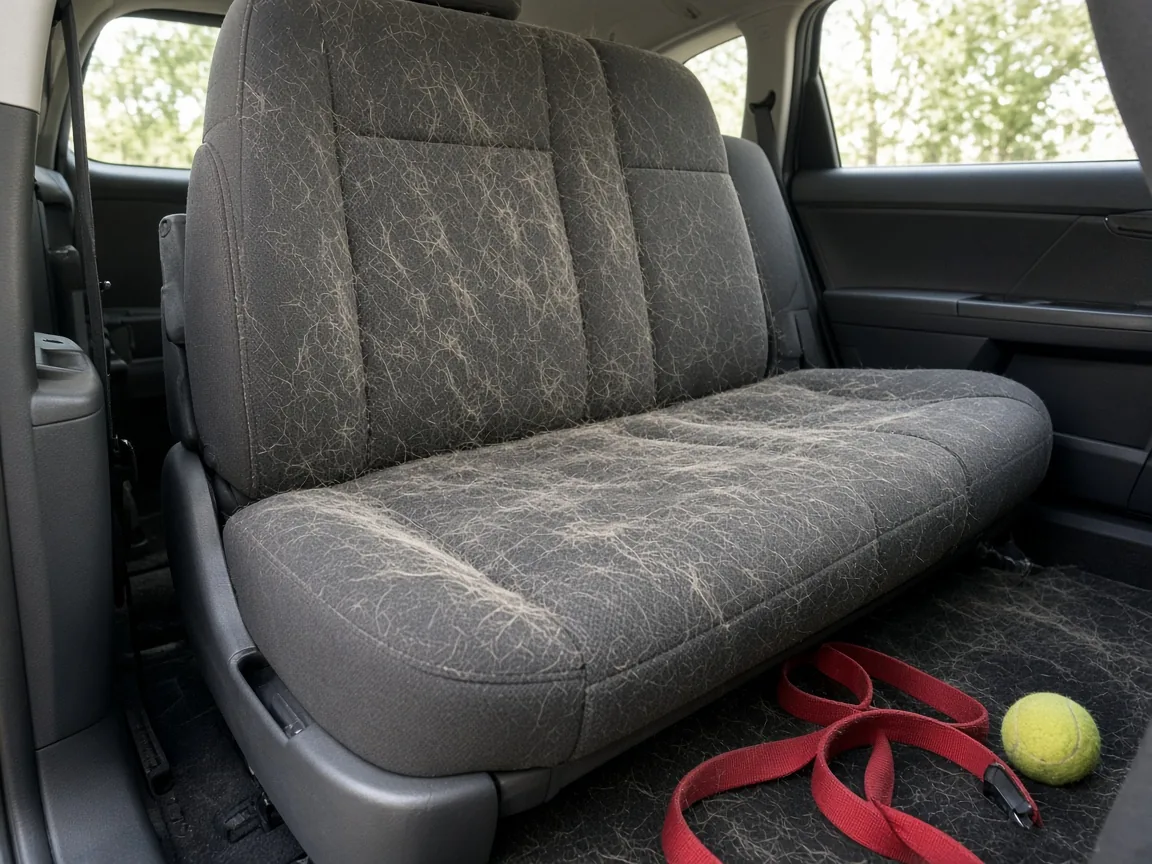 Cloth car upholstery holds hair in the weave and in the seams.
On car seats, cloth upholstery is often tight, and hair bakes into the weave. Take out blankets and seat covers and wash those if the label allows. Vacuum the gaps and footwells, then use the glove on the cloth. A washable seat cover catches the next load. Keep a mitt in the door pocket so you are not hunting for a lint roller with an empty roll.
On dog beds, the glove can lift a surface layer of loose fur. Wash the cover when the label says you can. Follow any care notes that came with the mitt. If washing guidance is missing, ask the seller before you soak or machine wash the pad.
Pet hair removal glove vs lint roller vs vacuum
For everyday cleanup, each tool has a job.
| Task | Pet hair removal glove | Sticky lint roller | Vacuum |
|---|---|---|---|
| Disposable sticky sheets | No | Yes, you keep buying refills | No |
| Power needed | No | No | Plug or battery |
| How you clear the hair | Peel the fur off by hand | Tear off a used sheet | Empty the collector |
| Best everyday use | Couches, clothes, car seats, dog beds | A quick pass on clothes | Carpets, seams, corners, large areas |
| Fits in a drawer | Yes | Yes | Model dependent |
| Short or embedded hair | May need another pass or a second tool | Can struggle on some weaves | A motorized pet tool helps |
A glove is a strong lint roller alternative when you are tired of refill rolls and you want something reusable for upholstery. A vacuum still wins on carpet and in tight seams. Many homes do well with both: glove for the daily wipe, vacuum for the weekly deeper clean.
Grooming glove vs deshedding brush vs furniture mitt
Cleanup on the couch and coat care on the dog are related, and they are not the same chore.
A grooming glove or deshedding glove is for the animal. The soft tips make the session feel like petting, which is why many cats and some brush shy dogs will sit for it. Reviews of popular silicone tip gloves often note that those tips collect less fur on very short coats than a deshedding rake would. If you searched for how to use a grooming glove on short haired dogs, use light strokes in the direction of growth and peel hair off the palm often. A rubber curry or a deshedding brush may move more loose undercoat on a dense, short coat.
A dog shedding brush or deshedding brush pulls dead hair out of the coat before it lands on your furniture. PetMD advises matching the tool to the coat, and in a guide on excessive shedding it mentions a slicker brush, a FURminator, or a hand mitt to help remove dead hairs. Use each tool on the surface it was made for. A furniture pad on the dog can miss mats and may irritate the skin. A deshedding brush on a sofa can snag the fabric.
Cats, short hair, and heavy shedders
Does a pet hair glove work on cats? For fur already on the couch, clothes, or a car seat, yes. Cat hair is often finer and more charged with static, which is why it clings to sweaters. A furniture mitt is built for that leftover hair, from a cat or a dog. For the cat's coat, use a grooming glove or a brush your cat accepts. Owners in a Maine Coon thread described electrostatic furniture gloves as easy on fabrics: the glove is for the quilt and the couch, not a substitute for coat care.
Short hair on furniture is harder than a long, loose clump. Short or deeply embedded hairs may need more than one pass, and some may remain. If the weave is tight, a rubber squeegee or a vacuum may finish what the glove started. Pressing harder is not the fix.
Heavy shedders, such as Huskies, German Shepherds, Labs, and many Maine Coons, will refill the couch during shedding season. The glove keeps daily life livable. The bigger win is pulling loose undercoat on a schedule, then wiping the furniture after, more often in spring and fall.
Wet vs dry use, and how to clean the glove
Wet vs dry use comes up because many grooming gloves are sold for baths and for dry petting. Those silicone tip gloves can be rinsed in the tub as loose coat comes off. That advice belongs to grooming gloves, not to a furniture pad.
For a household rubber dish glove used on a couch, Reddit users often dampen the glove slightly. A little moisture can help hair clump. Wring it so you are not wetting the fabric. For a dedicated pet hair remover mitt, follow the care instructions that came with it. Peel the hair off after each use. If washing guidance is missing, contact the seller before soaking or machine washing the pad.
Shedding season and why the fur comes back
You can lift today's hair. You cannot turn shedding off.
PetMD reports that brushing is the main at home step for coat health. In a PetMD guide on controlling pet hair, groomer Mari Rozanski says daily brushing is ideal, and that once or twice a week is a more realistic target for many homes. During spring and fall, PetMD says you should brush more often. ManyPets describes that seasonal flush as "blowing their coat," when double coated dogs drop a large amount of loose undercoat.
See a vet if the skin looks flaky, greasy, reddened, or very smelly, or if shedding seems excessive and comes with itching, more thirst, more urination, weight change, or hair that looks dull or broken. Do not use human shampoo on a dog. PetMD warns that it can be too harsh and can make shedding worse. ManyPets advises against shaving a double coated dog to reduce hair, because the coat helps with temperature and sun protection. On PetMD, Dr. Coates points to adequate protein and essential fatty acids as part of a normal coat, once medical problems are ruled out. Ask your vet before you change a diet or add a supplement.
The glove handles the hair that is already on your furniture. If you want a reusable pad made for sofas, beds, car seats, and clothes, the Love My Puppy pet hair remover glove is built for that daily cleanup, before guests arrive or after a muddy walk. The pad is about 24 by 16 cm, with a retaining strap you slide your hand under. Use short, gentle strokes in one direction, try a hidden area first, and peel the fur as it rolls up. The listing is clear that short or deeply embedded hairs may need another tool, and that the pad is for surfaces, not for grooming your puppy.
Frequently asked questions
Does a pet hair removal glove work on cats? Yes, on the fur cats leave on couches, clothes, and car seats. A furniture mitt is meant to lift that loose hair. For the cat's coat, use a grooming glove or a brush your cat will sit for.
Can I use a grooming glove on short haired dogs? You can, with light strokes in the direction of the coat, peeling hair off often. On dense, short coats, a rubber curry or a deshedding brush often moves more loose undercoat than soft silicone tips. Short hair already in a sofa weave may need another pass or a vacuum.
Is a pet hair glove better than a deshedding brush? They do different jobs. A deshedding brush or dog shedding brush pulls loose undercoat from the animal. A pet hair removal glove, or pet hair remover mitt, lifts hair that is already on fabric. Most homes with heavy shedders benefit from both.
Should I use a pet hair removal glove wet or dry? A grooming glove is often used dry or in the bath. A rubber dish glove on furniture is often slightly damp, as long as you do not soak the fabric. For a dedicated furniture mitt, use it dry unless its care card says otherwise, and ask the seller before you soak or machine wash it.
How do I clean a pet hair remover mitt, and does it help with heavy shedders? Peel collected hair off the pad after each use and follow any supplied care directions. If those are missing, contact the seller before washing it. For heavy shedders the mitt speeds up daily cleanup in shedding season, and you will still want regular brushing and a vacuum pass on seams and carpets.