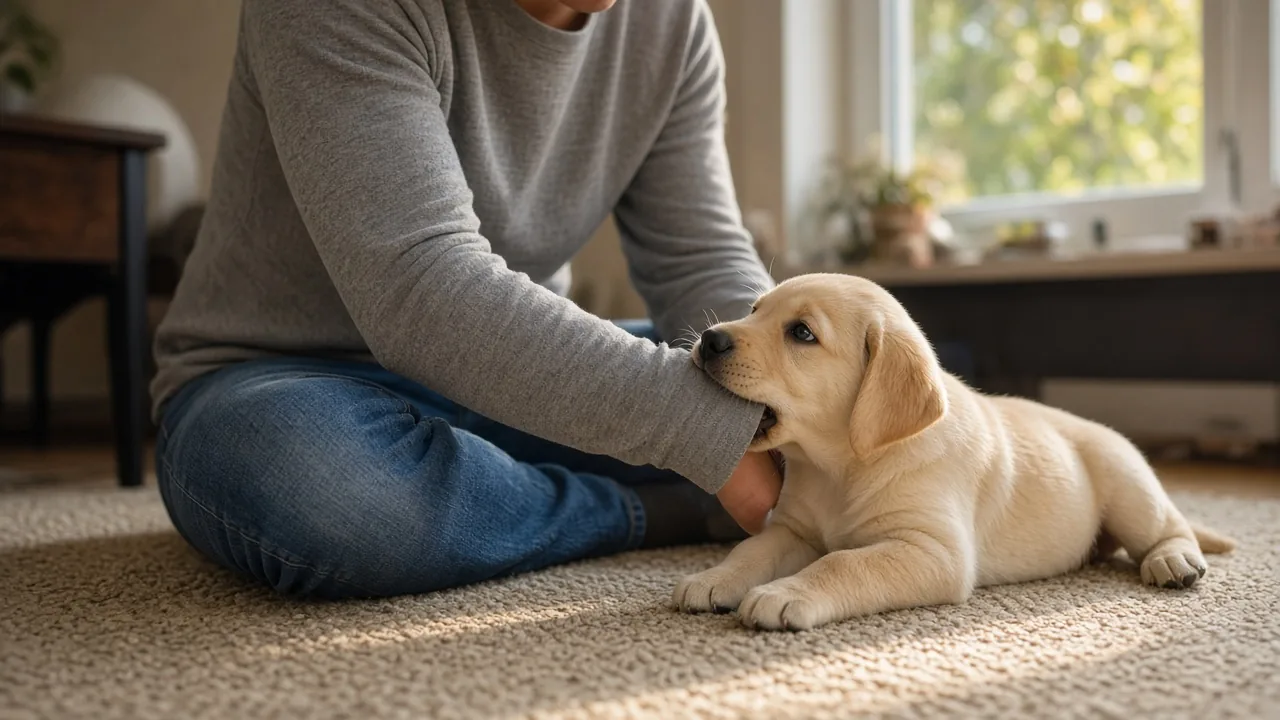
 Those needle teeth on a sleeve feel personal. To the puppy, this is play.
Quick answer: To stop puppy biting, offer a toy the moment teeth touch skin. If the nipping keeps going, stay still, then walk into another room or behind a gate. Stay out for about 20 to 30 seconds, the pause PetMD recommends, and come back with a toy. A tired or teething puppy bites more, so add naps and safe chews.
On this page
- Why your puppy keeps biting you
- How to stop puppy biting, step by step
- How to stop a puppy biting hands, feet, and clothes
- The evening bitey hour and why tired puppies nip more
- Should you yelp when your puppy bites
- Puppy teething and when puppies stop biting
- What makes puppy biting worse
- Puppy biting vs aggression, and when to get help
- Frequently asked questions
Key Takeaways
- Puppy biting is a normal part of play, exploration, and teething. PetMD says it often peaks around 13 weeks, which is when adult teeth start to come in.
- Offer a toy the moment teeth come toward skin. If the mouth stays on you, end the game and leave for a short, still pause, then come back with a toy.
- A yelp or "ow" helps some puppies and winds others up. The AKC says if it makes biting worse, turn and walk away instead.
- The evening "land shark" spell often means the puppy is overtired, hungry, or needs a potty break. PetMD and the AKC both point to a nap or a basic need, not a longer wrestling match.
- Most puppies have their adult teeth by about 6 to 7 months. That is the window PetMD describes across its biting and teething guides. Hard bites that break skin need a vet or a qualified trainer. So does biting with a stiff body and deep growling.
Why your puppy keeps biting you
Your hands look raw. The ankles are worse. Evening arrives and the puppy who was asleep on your foot is now hanging off your sweatpants.
This is miserable, and this kind of puppy nipping is also a normal stage. In a PetMD guide written by veterinary behaviorist Dr. Wailani Sung, puppies bite to explore, to play, and to learn bite inhibition, which is how much pressure they can use with their mouth. Adult teeth start to come in at 12 to 16 weeks. PetMD says biting often peaks around 13 weeks, when the gums are sore.
VCA Animal Hospitals notes that nipping, mouthing, and biting in young dogs is generally a form of social play. Teething is more likely to show up as gnawing on household objects. Both can happen in the same afternoon.
Certified trainer Sarah Hodgson, quoted by ManyPets, puts it this way: "Puppies are going to test-chew everything — at first, they're exploring, then later, they're teething. Nipping is very common at this stage." Hodgson also notes that puppies nip more when they are excited or have an unmet need. It can be like a crying baby who may be asking for a nap, a meal, a potty break, a walk, or play.
None of that makes the punctures on your wrists feel smaller. It does mean you can answer the biting with a clear plan, instead of treating every nip as a character flaw.
How to stop puppy biting, step by step
Your puppy still needs to use their mouth. What you want to teach them is that hands, feet, and clothes end the fun, and that toys keep it going.
- Have a toy in every room you use. PetMD and the AKC both say to offer a chew the moment teeth come toward skin.
- Praise the puppy when the mouth lands on the toy, not on you.
- If they will not switch and they keep biting you, PetMD says get up and leave. Go into another room or behind a gate so they cannot follow. Wait about 20 to 30 seconds, then come back and start play with a toy.
- VCA describes the same idea. Closing a door and walking out teaches that biting leads to immediate inattention.
- ManyPets describes a time out as stopping interaction when biting happens, so the puppy learns that rough play ends the fun. Trainers differ on how many seconds that pause should last. The shared rule is a short, still break, then you come back with a toy, not with more wrestling.
- Reward the puppy for staying still. The AKC reminds people to say "good dog" or offer a piece of kibble when the puppy is quiet, because those moments teach what you want.
- If the puppy cannot settle, they may be tired, hungry, or need to go out. PetMD says to put an overly tired puppy in a crate or a designated area with a treat to encourage a nap. The AKC says a biting puppy is sometimes an overtired puppy who needs a quiet space. Other times they need a potty break, food, or water.
PetMD is direct on one more point. Never encourage nipping by inviting a puppy to chase your hands or toes. Those games get less cute as the mouth gets stronger.
PetMD also recommends puppy socialization classes, where puppies learn bite inhibition and how to read other dogs, in a group of actual puppies. Dogs with adult teeth should not be in that play group. The AKC suggests a well run local class, such as an AKC S.T.A.R. Puppy class, as another place to practice a polite mouth around other dogs. ManyPets lists teaching a "leave it" cue as one more way to discourage biting. Use that cue along with redirecting and ending the game, not instead of them.
If you want those steps in one place, along with help for hands, evenings, and yelping, our puppy biting guide lays out a plan the whole house can use. Click Here to read it.
How to stop a puppy biting hands, feet, and clothes
Hands and feet move, so they become chase toys.
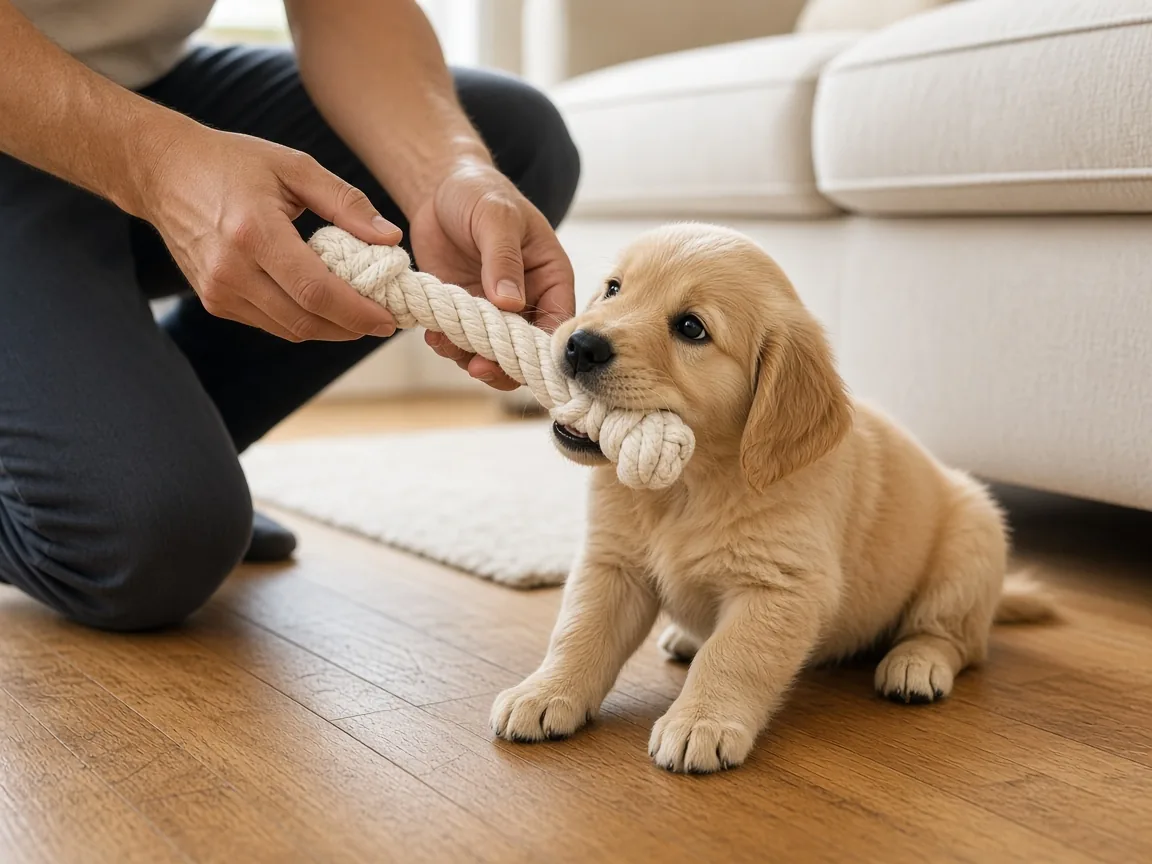
Click Here for the full puppy biting guide. Swap the hand for a toy before the teeth land, then praise the mouth that chose the rope.
PetMD's advice for hands and feet is practical. Always play with a toy so there is something fitting to grab. Walk at a steady pace so your feet are not a moving target. If the puppy bites your hands while you are petting them, redirect to a chew they like.
If they grab your clothing, PetMD says to stop moving and stop giving any resistance. Then end the play and leave. Pulling the fabric away can turn the moment into a tug game you did not mean to start.
For ankle chasing on a walk, PetMD suggests dragging a tug toy along the floor so the puppy targets that instead. You can also teach them to look up and follow you, with food as the reward. If they cannot respond and they keep biting, PetMD says they may be overly tired. In that case, put them in their crate or designated area with a treat to encourage a nap.
The AKC quotes trainer Kathy Santo on a still way to end the game. Turn around and tuck your hands into your armpits. "It's actually a calming signal and a minor form of attention withdrawal," she says. Santo also warns against roughhousing that only encourages the puppy to lose control and bite.
If children are in the house, VCA notes that they are often the most vulnerable. A child's attempt to stop the biting can look like an invitation to chase. An adult should supervise play, and everyone in the house should use the same response. Teeth on skin ends the game.
The evening bitey hour and why tired puppies nip more
Owners on r/puppy101 often call this land shark season, and they describe a pattern. The biting gets worse after a stretch of being awake, and again right before dinner. One owner there wrote that after watching a few days, the pattern was obvious, so they could offer a chew or start a nap before teeth found an ankle.
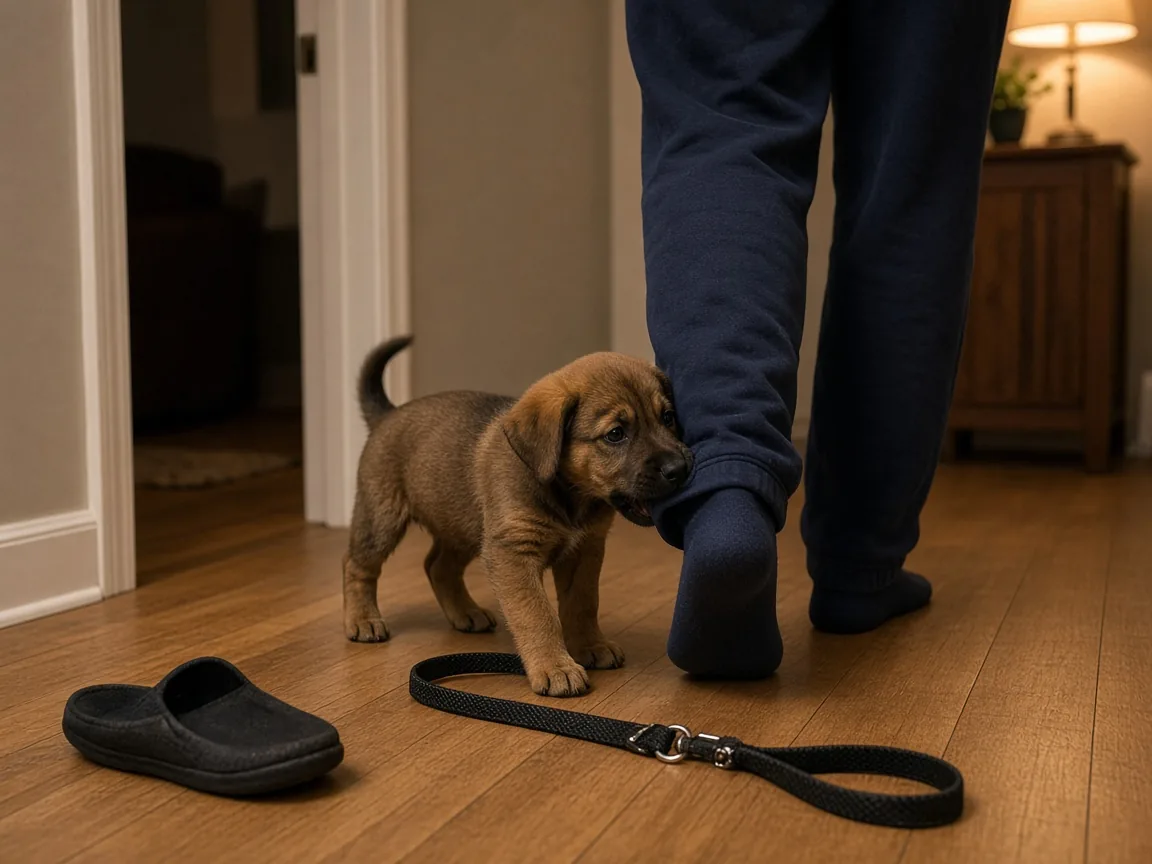 Evening nipping at ankles is often a tired puppy, not a sudden change in personality.
That lines up with what vets describe. PetMD's guide on a puppy sleep schedule says puppies sleep anywhere from 12 to 20 hours a day. The range depends on age, breed, and how much they have been doing. In a related PetMD article, young puppies can sleep up to 20 hours a day during growth. Overtired pups "get cranky and act out." If the house is noisy and the puppy will not settle, PetMD suggests a quiet place for a nap.
The AKC makes the same connection. Sometimes a biting puppy is an overtired puppy who needs a quiet space or a crate to rest. Other times they need a potty break, or they are hungry or thirsty. If the puppy has been cooped up and still has energy to burn, the AKC suggests a short run around the yard, then a chance to rest.
A longer play session at 7 p.m. is rarely the fix for a puppy who has already been up too long. PetMD says a tired puppy bites more and may need to be encouraged to nap. Try the nap first when the biting looks frantic and the puppy looks worn out. Come back to play when they wake up rested.
Should you yelp when your puppy bites
Littermates often yelp when a bite is too hard, and play stops. That is how bite inhibition starts. Some trainers ask you to copy it with a short, high pitched "ow."
The AKC says this can help some puppies, and it also says to beware, because for some puppies the sound gets them more worked up and more likely to bite. In that case, the AKC's advice is to turn, walk away, or put the puppy in their crate for a few minutes so they can settle. If they do back off after the sound, reward them. Keep the crate a rest place, not a punishment. The AKC is clear that the puppy should not learn to associate the crate with being in trouble.
Owners report the same split. In that r/puppy101 thread, one person wrote, "Yelping just made mine more excited." If you try a brief yelp and the biting gets harder, stop yelping and walk away.
Yelling is a different thing, and it is not a training plan. ManyPets quotes Hodgson: "Yelling is a release for you, but it leads to more problems down the road." The AKC notes that yelling can function as a reward because it is a big response, and that it can also make a puppy fearful of being handled.
Puppy teething and when puppies stop biting
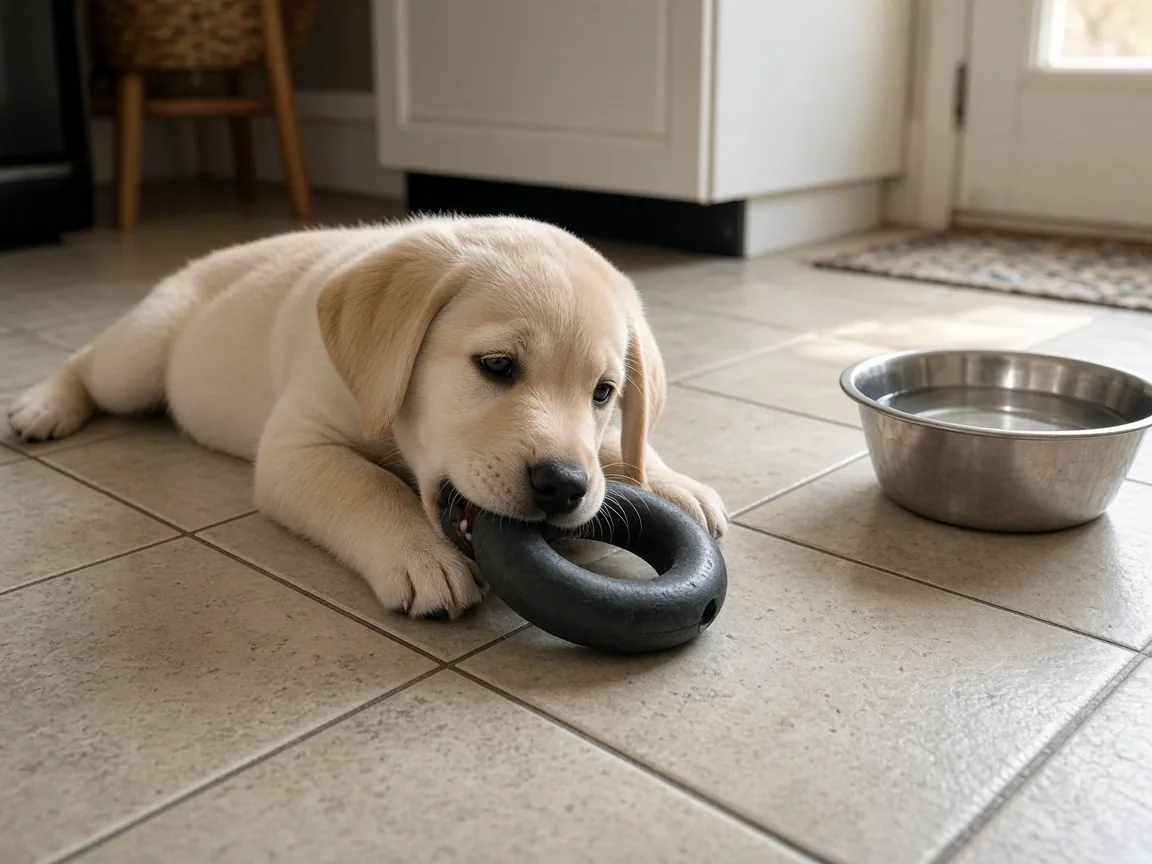 A soft rubber chew toy gives a sore mouth a better job than a sleeve, which is the aim of puppy biting training during teething.
PetMD's biting guide says puppy biting reaches its peak around 12 to 13 weeks, when baby teeth give way to adult teeth, and that all adult teeth are typically present by 7 months. At that point teething is no longer a factor. With clear, consistent responses, many puppies start to mouth less. PetMD also warns that if biting has been rewarded, even by accident, it can continue into adulthood.
PetMD's teething timeline is close, and it adds a little more detail. Most puppies finish teething by about 6 months. Baby teeth often start to fall out between 3 and a half and 5 months. Adult molars come in between 5 and 7 months. Puppies have 28 baby teeth. Adult dogs have 42.
Lisa Mullinax, quoted by ManyPets, tells owners that teething is longer than many people think. She describes two phases. One is between 3 and 6 weeks. A longer one begins at 12 weeks and lasts until 24 weeks, which is about 6 months.
For the sore mouth itself, PetMD lists puppy teething toys made of softer material. It says to supervise so the puppy does not chew off and swallow small pieces. Give praise when they use the toy.
AKC Chief Veterinarian Dr. Jerry Klein puts a clear line under all of this: "Play biting does not mean your puppy is vicious." He adds that if you have not been able to moderate the behavior by the time they are 6 months old, it is a good idea to consult an experienced dog trainer or an animal behavior specialist.
What makes puppy biting worse
A few common reactions make the game more exciting, or more frightening. The table is a shorthand for the sources above.
| What people try | What can go wrong | A clearer move |
|---|---|---|
| Yelling or shoving the puppy away | The AKC says yelling can act like a reward because it is a response. PetMD says harsh verbal or physical corrections can create fear or push a puppy to defend themselves. ManyPets says never to hit, not even a "gentle" tap. | Freeze, then leave for a short pause. |
| Wiggling fingers or playing with hands and toes | PetMD says this encourages nipping, and the bites will not stay harmless. | Start play with a toy in your hand. |
| A yelp that winds the puppy up | The AKC warns some puppies bite harder. Owners on r/puppy101 report the same. | Switch to walking away without a sound. |
| Sending the puppy to the crate in anger | The AKC says they should not learn to associate the crate with punishment. | Stay steady. Use the crate as a rest place, and let them out once they settle. |
| Waiting it out with no shared plan | If biting "works" to get attention, PetMD says it can last into adulthood. | The same response from everyone in the house, every time teeth hit skin. |
Tug is a special case. VCA says games of tug can be a good outlet if the person starts the game, the teeth stay on the toy, and play stops the moment teeth land on skin. ManyPets warns that rough games like tug of war can encourage harder biting. If you play tug, keep it under your control and end it the instant the mouth leaves the toy.
Puppy biting vs aggression, and when to get help
Most mouthing at this age is play or teething. A few patterns are different, and they deserve a professional look sooner rather than later.
PetMD says to contact a behavior professional if the bites include any combination of these signs. Those signs are holding with pressure, tension in the body, deep growling, and shaking of the head from side to side. If a dog already has adult teeth and still bites hard enough to cause pain, broken skin, or bleeding, and your usual approach is not working, PetMD recommends a trained expert. One option is a certified behavior consultant (CDBC). Another is a certified applied animal behaviorist (CAAB). A third is a veterinary behaviorist (DACVB).
ManyPets describes resource guarding. That is when a puppy growls, lunges, or bites as you reach for food or a prized toy. It advises a veterinary appointment, because a behavior change can be a sign of pain or another medical problem. That is especially true if the aggression is sudden or the puppy flinches at touch.
PetMD is also clear about what not to do. Harsh punishment does not teach the puppy how to behave. It can create fear and anxiety. It can also make the behavior worse. ManyPets adds that hitting, leash jerks, shock collars, and other painful punishments do not belong in this work.
If a bite breaks your skin, clean the wound and get medical care for yourself if you need it. Then call your vet or a qualified trainer about the puppy.
If the biting is wearing the whole house down, and you want one plan for hands, feet, the evening bitey hour, and what to do when yelping backfires, start with our guide on how to stop a puppy from nipping. It covers the same problems, with a response everyone in the house can follow. Click Here to read it.
Frequently asked questions
When do puppies stop biting? PetMD says biting often peaks around 12 to 13 weeks, and that all adult teeth are typically in by 7 months, after which teething is no longer driving the behavior. ManyPets cites Lisa Mullinax saying the longer teething phase runs from 12 weeks to 24 weeks. Consistent responses matter, because a bite that still "works" to get attention can last longer.
How do I stop my puppy biting my hands and feet? Play with a toy so the mouth has a legal target. Walk at a steady pace so your feet are less interesting. If teeth land on skin, freeze, and redirect to a chew. If that fails, leave for a short pause and come back with a toy, as PetMD describes.
How do I stop my puppy biting my ankles when I walk? PetMD suggests dragging a tug toy on the floor for the puppy to grab. You can also reward them for looking up and walking with you. If they cannot listen and they keep lunging, they may need a nap more than another lap around the room.
Is puppy biting normal? Yes. PetMD, the AKC, VCA, and ManyPets all describe mouthing and play biting as a normal part of how puppies explore, play, and learn bite inhibition. Normal does not mean you should let it continue on skin. Redirect it, and get help if the biting looks stiff, grows, or breaks skin.
Why does my puppy bite more in the evening? An overtired or hungry puppy, or one who needs a potty break, often gets mouthier late in the day. PetMD says puppies may sleep 12 to 20 hours a day and that overtired pups act out. Try a nap in a still, low noise spot, then a short play with a toy after they wake.
Should I yelp when my puppy bites? You can try a short, high pitched "ow," the way the AKC describes. If the puppy gets more excited, stop yelping, turn away, and leave. Reward them if they do back off. Skip yelling, which Hodgson and the AKC both treat as a problem, not a fix.
What toys help a teething puppy? PetMD recommends a variety of puppy safe toys, including soft rubber, a rope toy, and teething toys made of softer material. It says to supervise so pieces are not swallowed. Praise the puppy for using the toy. VCA notes that veterinary dentists often recommend against hard chews such as nylon, bones, and antlers, because they can break teeth. It suggests not letting a dog chew anything that will not bend. Ask your vet if you are unsure about a chew.
When should I call a trainer or a vet? Call sooner if bites come with a stiff body, deep growling, or head shaking, if a prized item is being guarded, or if the behavior appears suddenly. Dr. Klein at the AKC also suggests a trainer or behavior specialist if play biting has not improved by 6 months. A vet visit comes first when pain or illness might be involved.