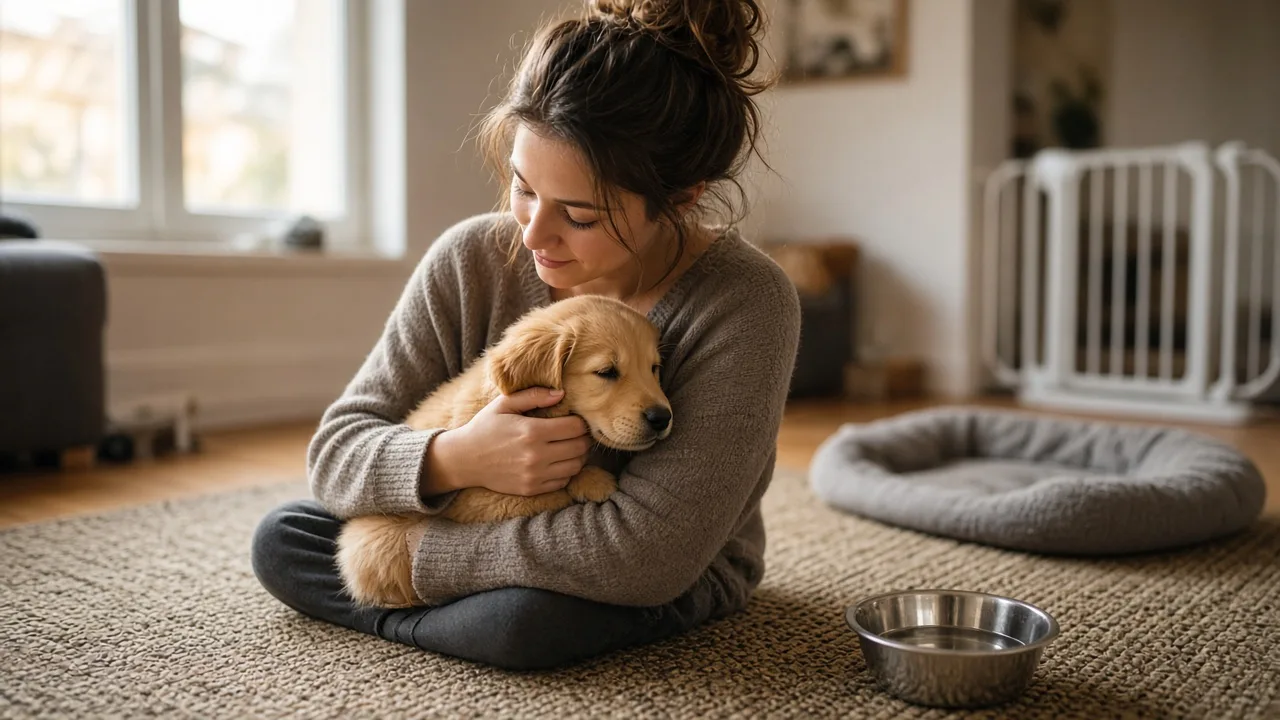
 Week one is about helping her feel safe in a new place.
Quick answer: In your puppy's first week, keep her world small and her days predictable. Set up one safe area before she arrives, and show her the potty spot before anything else. At night, put her crate beside your bed and comfort her when she cries. Feed regular meals, plan plenty of naps, and book a vet visit within the week.
On this page
- Before your puppy comes home
- The first hour home
- The first night with a new puppy
- Sample 8 week old puppy schedule
- Potty breaks and accidents
- Meals, water, and a puppy who won't eat
- Puppy biting in week one
- Handling and short training sessions
- The first vet visit and red flags
- The puppy blues are common
- Frequently asked questions
Key Takeaways
- One room, one bed, and one potty spot give her a small, predictable world.
- The PDSA, AAHA, and Blue Cross advise against ignoring a crying puppy, so keep the crate beside your bed at first.
- Take her out after she wakes, after meals, after play, and before bed.
- Book a vet visit in the first week, and call sooner for vomiting, low energy, pale gums, or a puppy who refuses food.
It's late, and the puppy you waited weeks for is crying in her crate. There's a wet spot by the back door and there are tiny teeth marks on your hands, and a quiet thought shows up that you would never say out loud. Did I make a mistake?
Owners on Reddit's puppy forums describe this exact week again and again. Most of what feels wrong is normal, a few things need a vet, and this guide helps you tell the difference.
Inside this guide:
- Where to put the crate on night one, and the small change to make each night after
- Why a middle of the night potty trip should be as boring as you can make it
- The question to ask the breeder or shelter before you drive home
- What the AKC calls the "witching hour," and why a nap often beats a new toy
Before your puppy comes home
Pick one room where your family spends time, like the kitchen, and block it off with a baby gate or playpen so it becomes her home base.
New puppy checklist
- A crate that fits her, with a soft bed inside
- A playpen or baby gate to close off her home base
- Food and water bowls, plus the same food she eats now
- A collar, ID tag, leash, and a few safe chew toys
- An enzymatic cleaner for the accidents that will happen
To puppy proof the room, get down on the floor and put away anything at her height that she could chew or swallow, like cords, shoes, houseplants, and cleaning products. Before pickup, ask the breeder or shelter what food she eats, because starting with that same food means one less change on a busy day.
The first hour home
Carry your puppy straight to her potty spot before you go inside, and wait quietly while she sniffs. If she goes, praise her in a soft, happy voice.
Then let her explore her home base at her own pace, and save visitors for later. PetCircle's guide also covers meeting kids and other pets. Keep those first meetings short and calm, with children sitting on the floor and you close by.
If she hides or seems very quiet that first day, remember that everything familiar to her is gone.
The first night with a new puppy
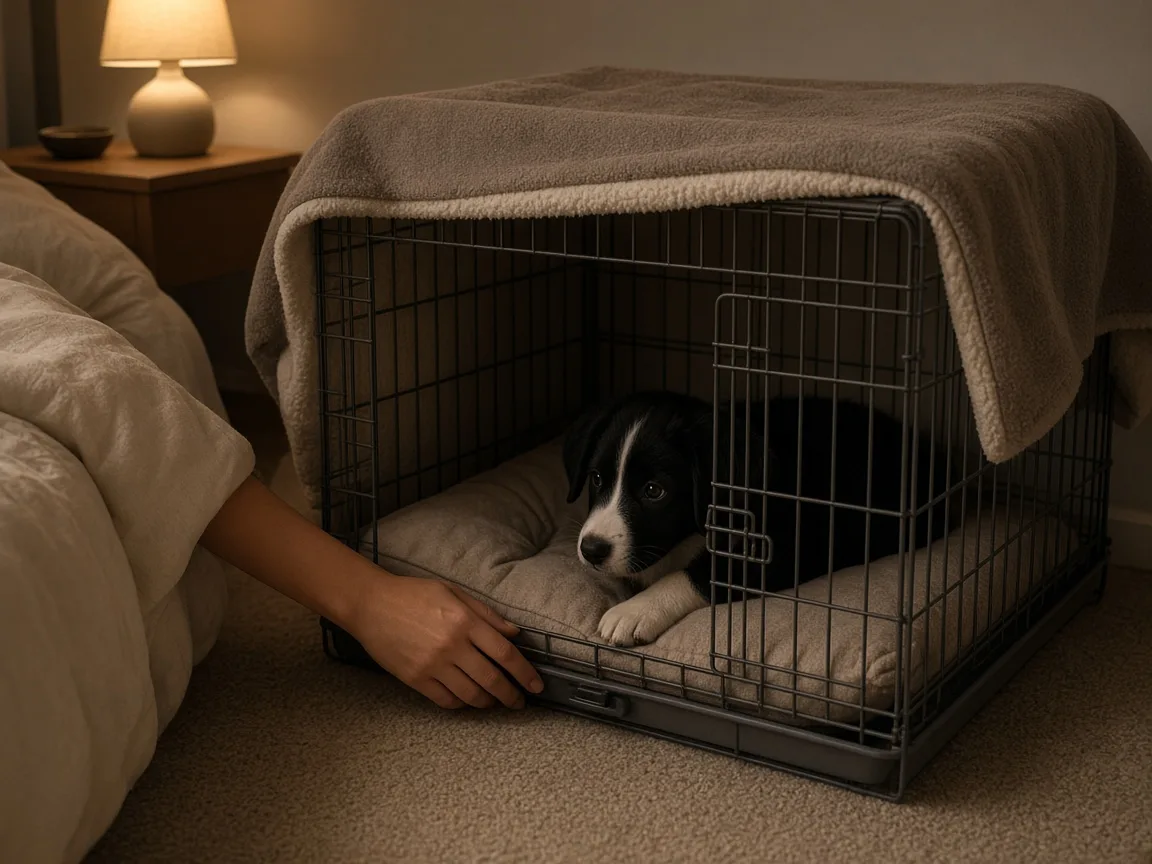 With the crate beside your bed, you can hear when she needs to go out.
Where should a puppy sleep the first night? Several guides, including PetCircle, the PDSA, and Blue Cross, suggest keeping the crate right beside your bed at first, where you can hear her stir. Once she settles, move the crate a little farther away each night.
Before bed, PetMD suggests an early dinner, an evening play session, and one last potty trip right before lights out. A blanket over the crate can make it feel more like a den.
When she cries, answer her, since the PDSA, AAHA, and Blue Cross all advise against ignoring a crying puppy. Rest your fingers near the crate door and talk to her softly. If crying starts the second the door closes, sit close and wait for a short pause before you open it. If she might need to pee, take her out.
Night potty trips should be dull, so carry her out, praise her quietly, and go straight back to bed. PetCircle says an 8 week old can hold it about 2 to 3 hours at night, while PetMD says 4 to 6 hours overnight.
Sample 8 week old puppy schedule
A steady routine makes potty breaks easier to predict, so adjust this sample to fit your household. The evening clock times come from PetMD's first night tips.
| Part of the day | What to do |
|---|---|
| Wake up | Carry her straight to the potty spot |
| Breakfast | Meal in her home base, then a potty break |
| Morning | Short play, a few minutes of training, then a nap |
| Midday | Potty break, a meal if she eats more than twice a day, then a nap |
| Afternoon | Potty break, gentle handling, quiet play, and another nap |
| Dinner | Around 5 PM (PetMD), followed by a potty break |
| Evening | Play from about 7 to 8 PM (PetMD) |
| Bedtime | Last potty break, then the crate around 9 PM (PetMD) |
| Overnight | Quiet potty trips whenever she wakes and stirs |
Potty breaks and accidents
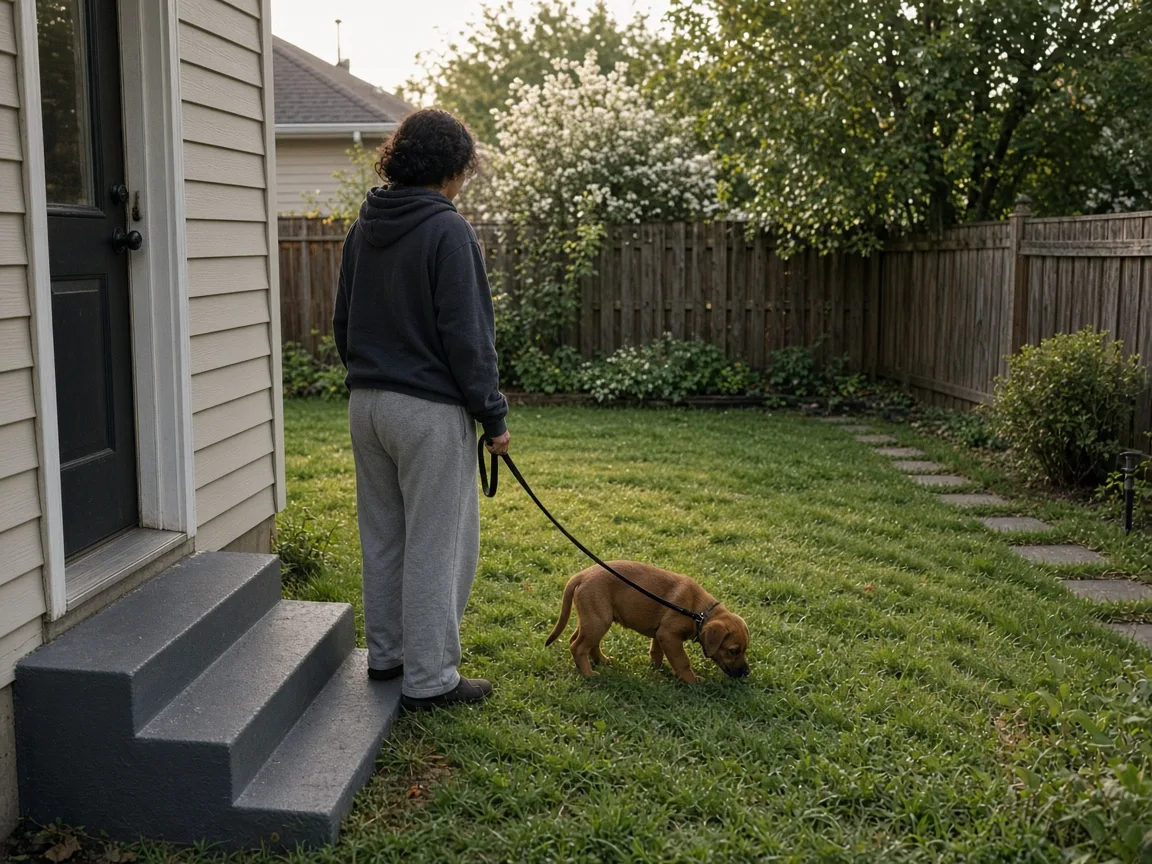 Using the same spot every time helps her learn where to go.
House training a puppy starts with the schedule above. Use the same spot every time, praise her the moment she goes, and head back inside without a long walk.
Peeing every few minutes on day one is a common worry on Reddit, so call your vet if something seems off. When accidents happen, skip the scolding. Clean the spot with an enzymatic cleaner so the smell doesn't draw her back, and think about what happened right before. If she had woken up or finished a game, take her out sooner next time.
Meals, water, and a puppy who won't eat
Feed meals on a regular schedule instead of leaving a full bowl down all day. Sources differ on meals. PetCircle suggests 3 to 4 a day from 8 to 12 weeks, while PetMD suggests 3 a day until about 14 to 18 weeks, and your vet can tell you which fits.
Keep fresh water out during the day. If night accidents keep happening, some owners lift the bowl a little before bedtime and offer it again in the morning, so ask your vet whether that suits your puppy.
What if my puppy won't eat on the first day? One owner on Reddit put it this way: everything was fine, except the puppy wouldn't touch her food. Some puppies eat less in a new home. Offer her usual food in a quiet corner, and call your vet if she keeps refusing it or also vomits or seems low on energy.
Puppy biting in week one
Owners on Reddit often say nothing prepared them for how much a puppy bites, and the biting often gets worse when she's tired. The AKC calls that wild evening stretch the "witching hour."
When teeth land on skin, stop the game and offer a chew toy instead. If she keeps going, she probably needs a nap more than more play, so settle her in the crate with something to chew. Ask everyone in the house to respond the same way.
Handling and short training sessions
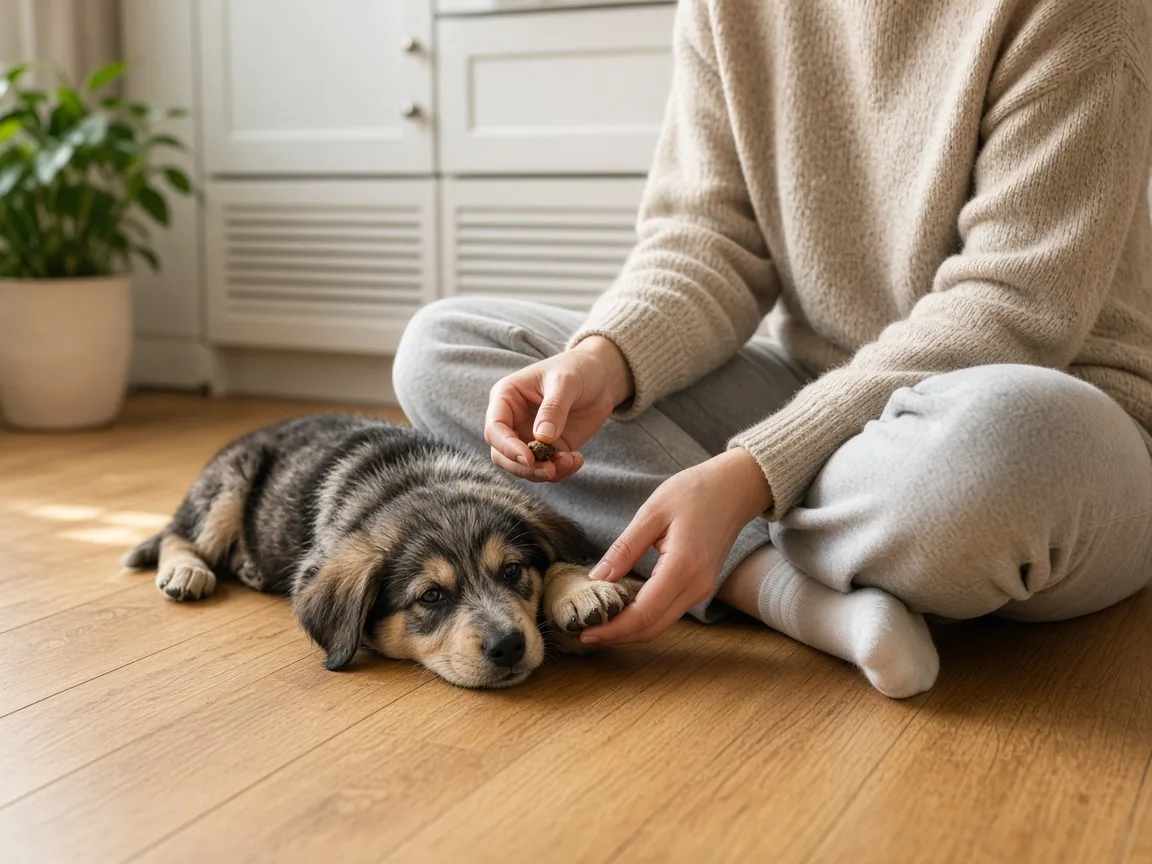 This small habit can make nail trims and vet visits easier later.
Spend a few minutes each day touching her paws, ears, mouth, and collar while you hand over a treat.
Keep training sessions to a few minutes. Work on her name, a sit, or coming to you across the kitchen, and say a marker word like "yes" the moment she gets it right.
ManyPets trainer Oli Juste points to the weeks before 16 weeks of age as an important window for socialization. In week one, let her watch new things from a safe spot, and ask your vet which outings are safe.
The first vet visit and red flags
PetCircle and PetMD both suggest a vet visit in the first week. Bring her papers and ask about vaccines, worming, flea and tick care, and a microchip.
| Often normal in week one | Call your vet |
|---|---|
| Crying during the first nights | Vomiting |
| Eating less on the first day | Refusing food along with vomiting or low energy |
| Sleeping most of the day | Low energy when she is awake |
| Quiet or shy at first | Pale gums |
The puppy blues are common
On Reddit's puppy forums, some owners admit they regretted the decision by day two. One owner, a week in, compared the feeling to postpartum depression. The AKC has even written about a University of Helsinki study on the puppy blues, so if you feel this way, you are far from alone.
It helps to make the week smaller. One room, one sleep spot, a potty plan you can keep, and a few short handling sessions are enough to start. If you share your home, take turns with night duty so someone gets real sleep. If the feelings grow heavy or won't lift, talk to your doctor.
If the hardest part is keeping everyone in the house on the same page, Click Here to visit Love My Puppy and see the First 14 Days Kit, which includes puppy schedules built for her age and a night duty plan with one name on it.
Frequently asked questions
What is the 3-3-3 rule for puppies? It's a common rule of thumb that PetCircle covers. It says a new dog may need about three days to settle, three weeks to learn your routine, and three months to feel at home, but every puppy is different.
Should I let my puppy cry it out? No. The PDSA, AAHA, and Blue Cross all advise against ignoring a crying puppy. Keep the crate beside your bed and comfort her with your voice.
How often should I take an 8 week old puppy out at night? PetCircle says an 8 week old can hold it for about 2 to 3 hours, while PetMD says 4 to 6 hours overnight. Take her out when she stirs and keep each trip quiet.
How much sleep does a puppy need? PetCircle says 15 to 20 hours a day, and the PDSA says 18 to 20 hours. An overtired puppy often bites more, so build naps into her day.
Is it normal for a new puppy not to eat on the first day? Some puppies eat less while they adjust. Call your vet if she keeps refusing food or also vomits or seems low on energy.
Sources named in this guide include the AKC, AAHA, PDSA, Blue Cross, PetMD, PetCircle, and ManyPets. This is general information, not veterinary advice.